Impact Story

AERC IMPACT STORY

HARAD CHUMA LUNGU, ZAMBIA

“I am honored to have been one of the recipients of the Collaborative Masters in Agricultural and Applied Economics (CMAAE) scholarship. Thanks to your generosity and initiative, I am confirming that I am graduating from the University of Pretoria this Autumn (April 17, 2019). The scholarship was awarded to me on February 8, 2017.

Growing up in a developing country has not only offered academic and financial challenges, but has helped me realize the true value of university education and my role to give back to society in any possible way I can.

I completed my master’s program specializing in Environmental and Natural Resource Economics. I was privileged having been taught and supervised by the best lecturers in CEEPA at UP. Through their complete dedication to academic excellence, I was honored to be selected to present my research work at the inaugural world conference on Sustainability and Development at the University of Michigan in November 2018. Further, I was informed by my supervisor that I was one of the few students who has graduated “on time” from my program at UP and it’s a fit I never imagined possible.

With that, I offer special gratitude to my supervisor Dr. Selma Karuaihe at UP. I also extend much appreciation to Ms. Christa VanLoggerenberg (In copy) who is the AERC CMAAE admin person at UP, her kind and friendly personality made life a little easier at UP. I consider myself fortunate to have been able to attend varsity at UP. Working as Research Assistant in Zambia prior to my admission at UP, I enjoyed participating and contributing to “Research4Development” activities that enabled targeted groups to lead resilient and sustainable livelihoods through the program initiatives championed. I now hope to carry on in a similar path but with a more understanding of the role of research in informing policy and the subsequent impacts on people’s livelihoods.”

Outreach to Francophone Africa

outreach to francophone

africa

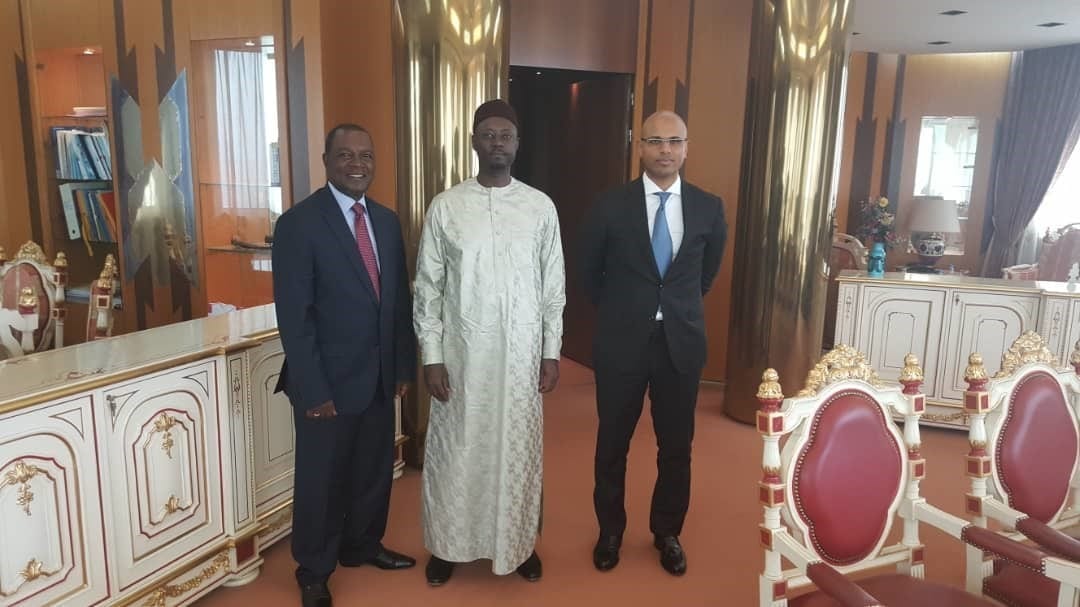
Professor Njuguna Ndung’u met with la Banque des tats de l’Afrique Centrale (BEAC) Governor Abbas Mahamat Tolli on February 13th in Yaoundé, Cameroon to discuss the integration of BEAC into AERC’s Governors Forum. Also present was the Director General of Research, Ivan Bacall Ebe Molina.

Created in 1972, the Bank of Central African States (BEAC) is the central bank common to the six states that make up the Economic and Monetary Community of Central Africa (CEMAC). They are respectively Cameroon, Central African Republic, Congo, Gabon, Equatorial Guinea and Chad.

BEAC’s mission is to:

  • promote financial stability
  • promote the smooth functioning of payment and settlement systems
  • hold and manage the official foreign exchange reserves of the Member States
  • lead the CEMAC exchange rate policy
  • issue fiduciary money (banknotes and coins that are legal tender and discharging power in the CEMAC)
  • define and conduct the monetary policy of CEMAC.

AERC seeks to increase engagement with Francophone Africa to ensure that we effectively serve all stakeholders in the region.

Delivering Inclusive Financial Development and Growth

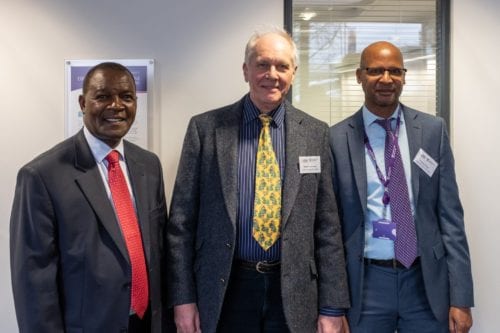
On 25 January, African Economic Research Consortium’s (AERC) Executive Director, Prof Njuguna Ndung’u,  gave the keynote speech at the UK’s Department for International Development (DFID) and ESRC Research Project on Delivering Inclusive Financial Development and Growth: A Workshop in Honour of Professor Christopher J. Green at Loughborough University.

He commended Prof Green’s dedication and contribution to the frontiers of research in economics and finance and to his exceptional contributions to the AERC Network. Professor Christopher J. Green has contributed to mentorship of researchers both through his university academic career as well as his active involvement in the critical capacity building dimensions of AERC.

‘We should continue the legacy of Prof Christopher Green as we seek to provide answers to these and other questions relating to financial sector development and financial inclusion in developing countries, in general, and Africa, in particular,’ said Prof Ndung’u.

Prof Ndung’u also shared his insights into Gaps, Challenges, and Policy Opinions in Financial Development and Financial Inclusion in Africa and suggested three key elements that are fundamental to sustaining the digital evolution for financial development in Africa – ‘connectivity, interoperability, and electronic ID systems’.

The research workshop was  jointly convened by the Centre for Global Finance (CGF) at SOAS and the School of Business and Economics at Loughborough University. More than 70 researchers, policy makers and practitioners from the UK, Netherlands, France, Canada, Cote d’Ivoire, Bulgaria, Israel, Iran, China, Kenya, Ghana, Nigeria, and Turkey came together to exchange ideas on preliminary research findings from the ongoing research project on Delivering Inclusive Financial Development and Growth, which is funded by the DFID and ESRC.

The Looming Debt Crisis in Africa

49th Biannual Plenary

Highlights

AERC’s 49th Biannual Plenary on “The Looming Debt Crisis in Africa” was engaging, energetic and thought provoking. Over 200 economists, researchers, policy makers and private sector participants from around the continent and globe debated the cause and potential impact of a looming debt crisis.

Watch a recording of the afternoon session: https://www.facebook.com/aercafrica/videos/234807027415055/

Watch a recording of the morning session: https://www.facebook.com/aercafrica/videos/324849975004987/

Key Points Discussed: 

  • Public debt has now climbed above 50% of Gross Domestic Product (GDP) in nearly half the countries in sub-Saharan Africa.
  • Africa’s public debt has not yet reached the proportions that triggered the Highly Indebted Poor Country (HIPC) initiative, the concerns regarding Africa’s present debt is the fact that it has risen sharply in a very short space of time.
  • Several countries saw a dramatic decline in debt stocks after they benefited from the Multilateral Debt Relief Initiative in 2005.
  • Much of the debt was owed to multilateral institutions like the World Bank and IMF and bilateral creditors in the 2000s, who formed the Paris Club. Today, a considerable share of African debt is held by private banks and bondholders.
  • Heavy debt servicing has raised apprehensions regarding sustainability, and carries immediate implications for macroeconomic stability, consequently economic growth and development.
  • Sub-Saharan Africa is slipping into a new debt crisis, with 40 per cent of the region’s countries now at high risk of debt distress — double the proportion of five years ago.
  • The number of countries already unable to service their debts has doubled in the past year to eight, and the IMF is urging African countries to raise taxes to provide more scope for paying interest.
  • Countries like Chad, South Sudan, the Republic of Congo and Mozambique have moved into “debt distress.”
  • Most countries in sub-Saharan Africa are being hit because they had borrowed in foreign currencies and are finding debt hard to finance after a significant depreciation.
  • Sub-Saharan governments have issued over $80 billion in dollar bonds to investors hungry for yield.
  • There have also been gloomier syndicated loans and bilateral debts, many to China, which has over US$60 billion on offer, and tied to big construction projects. Much of Africa has a shallow domestic market and no country in the world can self-finance.

Key Recommendations: 

  • The rules for how to handle Africa’s debt crises are changing. In the past much of the money was owed to the World Bank, IMF and Paris Club, an informal group of Western government creditors. This gave the fund the power to demand prudent economic reforms as a condition for help. Now China’s influence has risen—and it puts much less emphasis on good governance.
  • Unlike previous debt crises where the IMF and the World Bank played a leading role, this time the creditors are mostly commercial entities or state financial organisations. So, care is needed as they have little appetite for write-offs or restructurings.
  • There is need for austerity measure if sub-Saharan Africa is to move to prosperity. Countries can for instance scale down on infrastructure, even though there still exists a huge infrastructure gap in region.
  • We should have a low-income countries’ debt model.
  • To get out of this syndrome, hidden debts that IMF/World Bank cannot track should be identified and dealt with.
  • The fact that the structure of public debt has changed over the years calls for innovation for instance, re-profiling and selling the debt at the stage of roll over. This reduces cost, if the exchange rate does not go through the roof.
  • Replace non-concessional loans with concessional ones.
  • The quality of some debt contract is skewed and should be addressed going forward.
  • There is need for a strong fiscal policy in Africa.
  • We need to deepen domestic financial markets.
  • World Bank and IMF can mainstream budget support to some countries already in deep trouble through their poverty reduction programmes to relieve some debts.
  • There is need for behaviour change to diminish appetite for loans among African government leaders.

Research Workshops Recap

Trois ateliers de recherche
organisés à Nairobi
du 23 au 29 SEPTEMBRE 2018

Le CREA a organisé avec succès trois ateliers de recherche simultanés du 23 au 29 septembre :

Repenser l’intégration régionale pour un développement inclusif et durable – Phase-cadre

Atelier technique non étatique sur le suivi et l’évaluation

Repenser l’intégration régionale – Atelier de lancement d’études de cas par pays

Le programme de recherche du CREA repose sur quatre objectifs principaux :

Renforcer les capacités locales crédibles en matière de recherche orientée vers les politiques ;

Générer des résultats de recherche à l’usage des analystes des politiques et des décideurs ;

Promouvoir les relations entre la recherche et les politiques ; et

Encourager le maintien de chercheurs de grande qualité.

Repenser l’intégration régionale pour un développement inclusif et durable – Phase-cadre

L’intégration régionale constitue une priorité de développement pour l’Afrique. Le processus d’intégration de l’Afrique vers un continent de plus en plus connecté, concurrentiel et propice aux affaires est en cours, et sa feuille de route, dans certaines régions, est en cours de construction, comme en témoigne le récent accord conclu par les dirigeants africains sur la zone de libre-échange continentale africaine (ZLEC). En outre, la BAD a récemment mis au point une base de données centrale et un système permettant de collecter et de mesurer les progrès de l’Afrique qui est en mouvement. Les efforts fournis jusqu’à présent ont produit un Indice d’intégration régionale de l’Afrique, un outil d’action dans les récents développements politiques et opérationnels du continent.

Afin de faire progresser le programme d’intégration régionale, le CREA a lancé un nouveau projet de recherche collaboratif axé sur des problèmes auparavant inexplorés et sous-étudiés, y compris la ZLEC africaine. Le projet s’articule autour de cinq dimensions socio-économiques essentielles à l’intégration de l’Afrique : les infrastructures régionales, l’intégration commerciale, l’intégration des services, la libre circulation des personnes et l’intégration financière et macroéconomique. L’appel à documents-cadres pour ce projet a été envoyé en février 2017 et 24 propositions ont été enregistrées au total. Après examen, 12 propositions ont été sélectionnées et invitées pour l’atelier de lancement et de réflexion organisé en septembre 2017. Par la suite, le CREA a octroyé 12 subventions de recherche pour l’élaboration de documents-cadres.

Dans le cadre de la diffusion rapide des résultats de recherche issus de ce projet, trois projets de document ont été sélectionnés et présentés au vingtième séminaire de haut niveau sur les politiques du CREA (SPS XX) tenu les 12 et 13 mars 2018 à Kampala (Ouganda) sur le thème : « Repenser l’intégration régionale en Afrique ». Le séminaire a permis d’avoir un forum au cours duquel les décideurs de haut niveau des États de l’Afrique subsaharienne ont échangé leurs expériences et leurs opinions avec des chercheurs du réseau du CREA.

L’atelier de révision finale du projet – au cours duquel tous les documents-cadres ont été présentés – s’est tenu du 24 au 25 septembre, au cours des sessions suivantes :

Session 1 : Aide pour le commerce, accords commerciaux intrarégionaux et APE

Session 2 : Intégration de l’infrastructure et gouvernance

Session 3 : Économie politique, évaluations, concurrence et intégration régionale

Session 4 : Intégration agricole et marché des services de l’intégration

Une revue de recherche sera identifiée ou un volume de livre sera publié sur les 12 articles de recherche avec des recommandations politiques.

Atelier technique non étatique sur le suivi et l’évaluation

Le CREA met actuellement en œuvre une initiative financée par la Banque africaine de développement (BAD) intitulée Projet de renforcement des capacités de recherche et du savoir pour la transformation de l’Afrique, qui vise à développer les capacités en matière de recherche et de connaissances de différents constituants des États membres régionaux de la BAD. Les bénéficiaires de ce projet sont issus parmi les acteurs étatiques et non étatiques, ainsi que le personnel des communautés économiques régionales (CER) et le CREA lui-même.

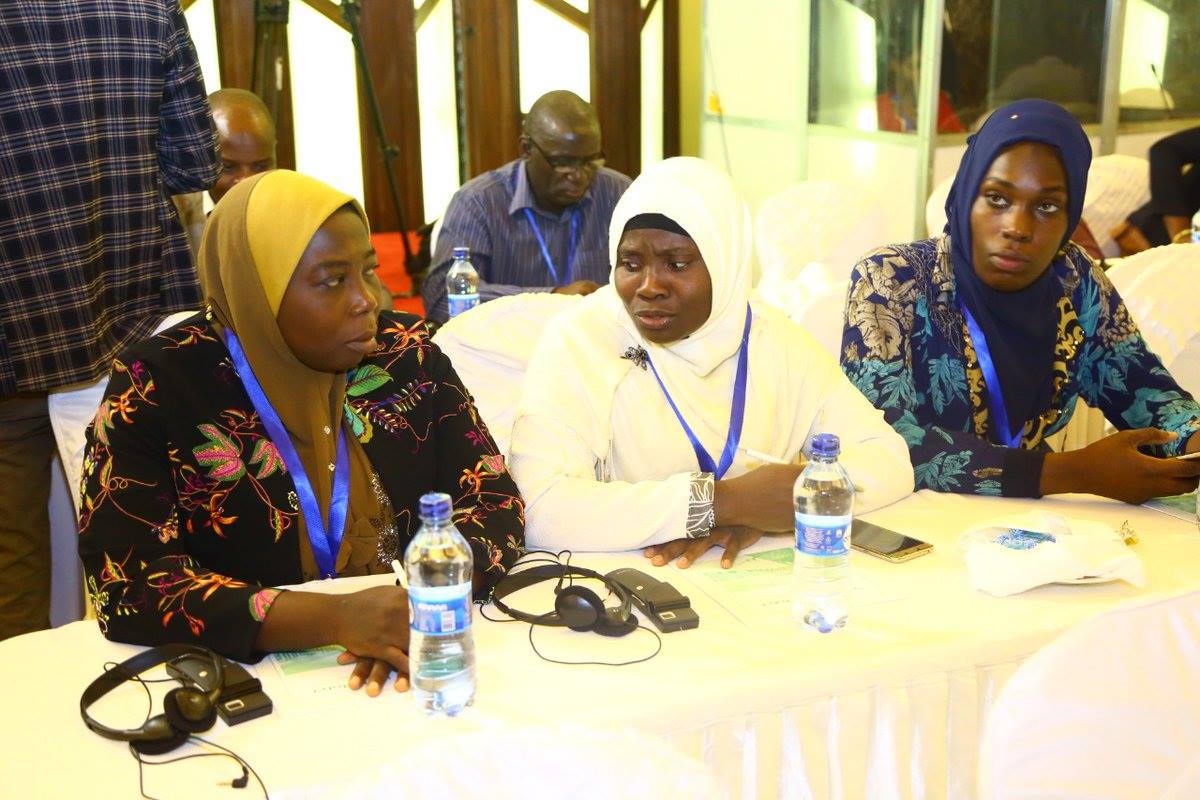
Dans le cadre du projet ci-dessus, le CREA a engagé un consultant pour organiser un atelier technique visant à renforcer les capacités des acteurs non étatiques autour des programmes de suivi, d’évaluation et d’apprentissage (MEL). Les objectifs de l’atelier étaient de permettre aux participants de mieux comprendre la complémentarité des principes de la MEL ; et comment ces concepts peuvent être appliqués aux projets et programmes de MEL mis en œuvre par des acteurs non étatiques dans leur travail quotidien.

23 participants venus de 12 pays étaient présents, avec des femmes composant les 70 % de l’atelier.

Repenser l’intégration régionale – Atelier de lancement d’études de cas par pays

L’atelier est la deuxième phase du projet Repenser l’intégration régionale du CREA. Les participants venus de 15 pays du continent ont présenté des études de cas sur les thèmes suivants :

Session 1 : Ordre économique international et interdépendance économique

Session 2 : La zone de libre échange continentale africaine (ZLEC)

Session 3 : Intégration régionale et performance économique

Session 4 : Commerce, monnaie commune et UEMOA

Session 5 : Infrastructures, commerce intra-africain et productivité

Au total, 20 études de cas ont été présentées, dont 15 seront sélectionnées pour être développées et publiées ultérieurement dans un journal spécial intitulé Repenser l’intégration régionale.

African Economic Research Consortium
Get in touch

3rd Floor, Middle East Bank Towers Building, Jakaya Kikwete Road, Nairobi, Kenya
Phone: +254 722 205272
+254 20 2734150
Fax: +254 20 2734170

Go Social
Subscribe to our Newsletter