
Dissemination Workshop on study, “The Challenge of Unemployment and Youth Unemployment amidst Fast Economic Growth in Ethiopia.”

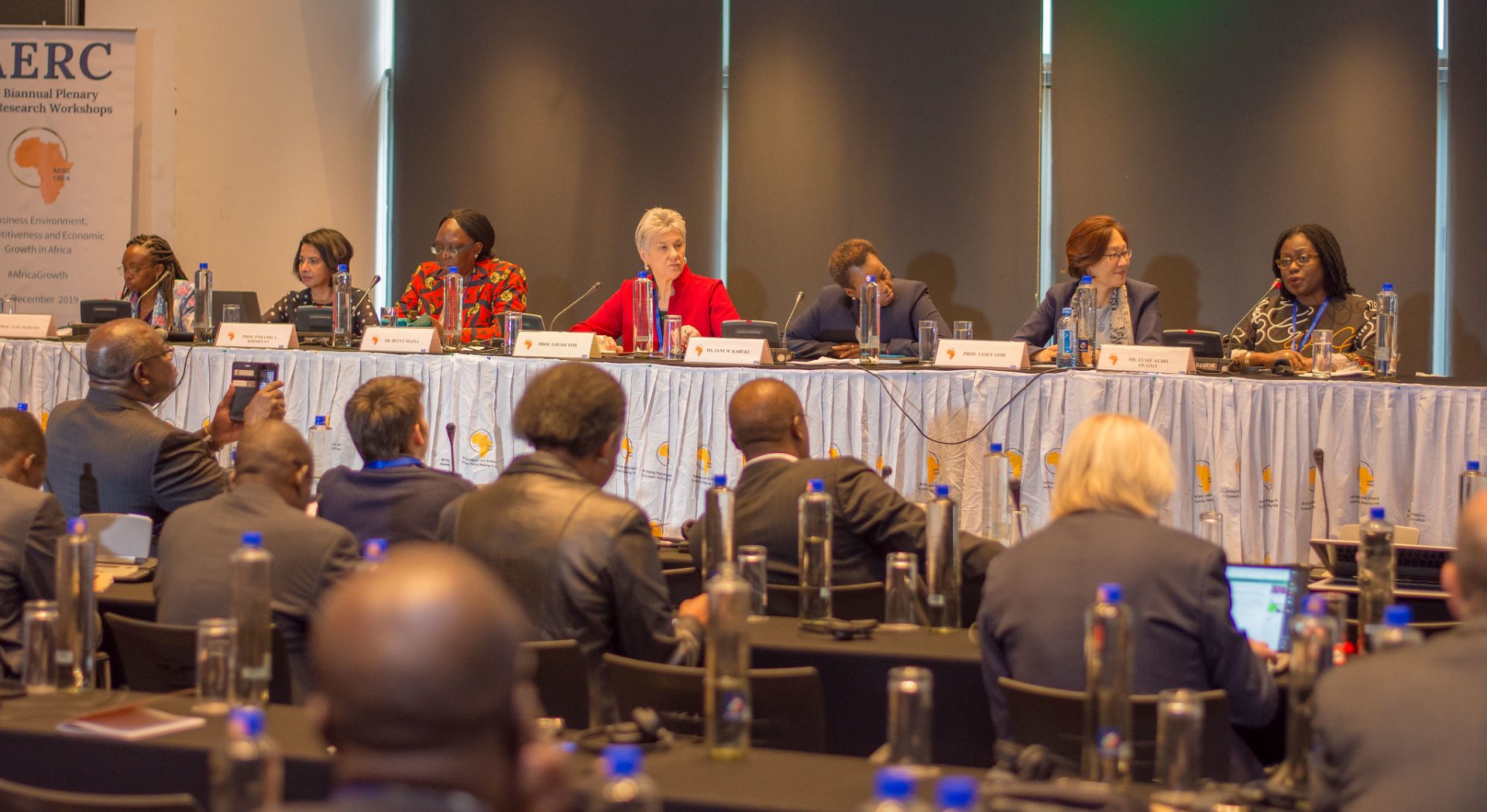
Ethiopia, 3rd March 2022…The Horn Economic and Social Policy Institute (HESPI) in collaboration with the African Economic Research Consortium (AERC) has hosted a dissemination workshop in Addis Ababa, Ethiopia, on the findings of a research on “The Challenge of Unemployment and Youth Unemployment amidst Fast Economic Growth in Ethiopia.” The dissemination event was chaired by Ambassador Peter Robleh, Associate Managing Director of HESPI and former Ambassador of Ethiopia to Belgium.

The workshop provided a platform for the dissemination, analysis and discussion of the research project which was commissioned by the AERC as part of the theme of “Work and Income for Young Men and Women in Africa: a political economy and social equity approach to the employment potential of specific sectors and subsectors in African economies.” This conducted in conjunction with Dutch Ministry of Foreign Affair’s Knowledge Platform on Inclusive Development (INCLUDE)- a collaborative research conducted in 9 African Countries.

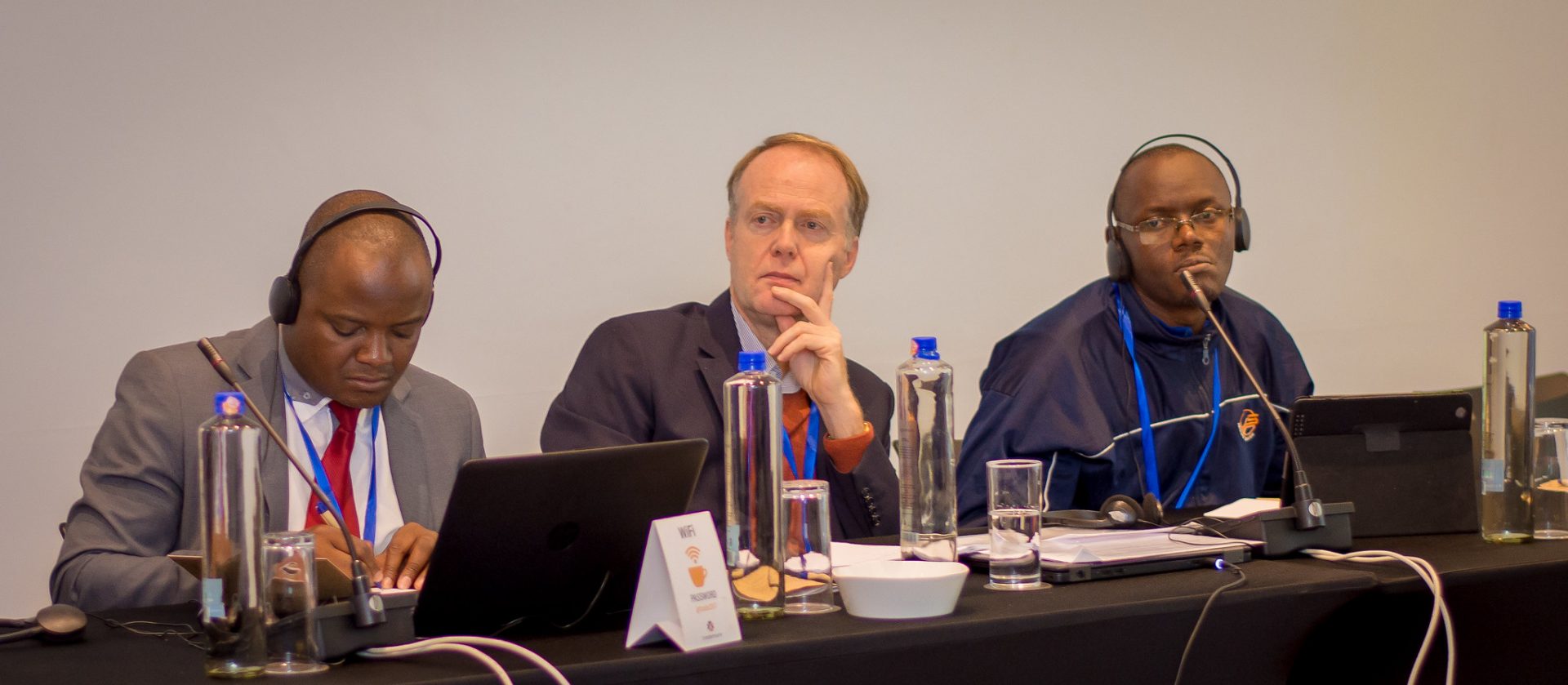
The Ethiopia research project aimed to identify promising economic sectors or value chains for job creation for young men and women in the country; identify conditions needed for the local and foreign private sectors to invest in these sectors; identify the actors that are needed to create these conditions that enhance or reduce investment security; and the ways to promote equal access and opportunity for youth t, while at the same time addressing inequality related to gender, socio-economic background, and place of residence. The research was conducted by Prof. Alemayehu Geda, from Addis Ababa University, who produced a comprehensive report and a policy brief that distilled the core findings. Dr. Andualem Goshu from the UN-ECA and Dr. Messay Mekonnen from the Addis Ababa University provided expert peer reviews as discussants. Also, Prof. Geda’s presentation of the paper was discussed and commented on by participants drawn from the government policy making bodies, NGOs, CSOs and a wide spectrum of private representatives.

At the opening session of the workshop, Prof. Abebe Shimeles, Research Director of the AERC, said, “we need to question the growing economies in Africa ‘where are the jobs created and what are the potential sectors?’ Amba. Peter, Associate Managing Director of The Horn Economic and Social Policy Institute (HESPI) on his part underscored that “Growing economies should create jobs and the highly contributing sectors and sub sectors should be carefully identified; and should enjoy policy attention.
It was highlighted at the event that there is a mismatch between sources of growth and job creation in Ethiopia. The sectors with capacity to generate high growth due to demand injection are not the sectors with significant job creation potentials, and these include the industrial and the service sectors have been the major sources of economic growth in recent years. Within the service sectors, the major source of economic growth was the trade sector which is not a major sector of job-sensitivity. In Ethiopia, the health, education, and transport sectors were identified to have significant employment potential.

It was therefore recommended that critical political choices have to be made on job creating sectors and sub sectors than solely focusing on driving high economic growth without creating new jobs. The study pointed out that the agricultural sector in general and sub sectors like animal farming, cash crops, and crops such as maize, in particular, as sectors with significant potential for employment.
Dissemination Workshop on study, “Identifying Activities for Greater Employment Generation in Egypt: An Input-output Analysis”

Egypt, 3rd March 2022… The African Economic Research Consortium (AERC) in collaboration with the Economic Research Forum (ERF) and the Overseas Development Institute (ODI), hosted the dissemination workshop of the research paper titled “Identifying Activities for Greater Employment Generation in Egypt: An Input-output Analysis” authored by Dr. Iman Al Ayouty.

This research paper comes out of a call for proposals under the African Economic Research Consortium (AERC), the Economic Research Forum (ERF) and the Overseas Development Institute (ODI) collaborative research project that seeks to identify the economic sectors with the greatest potential to increase youth employment. This collaborative research project, therefore, aims to strengthen the evidence base on youth employment, drawing on research that will be carried out to examine the growth sectors with the highest multipliers and potential to create employment opportunities.

The dissemination event aimed to give an overview of the paper’s objective, methodology and findings. The workshop was moderated by Dr. Chahir Zaki, Professor of Economics at Faculty of Economics and Political Science, Cairo University. Two lead commentators presented their feedback on the paper including Dr. Amirah El Haddad who is senior economist at the German Development Institute and Professor of Economics at the Faculty of Economics and Political Sciences, Cairo University and Dr. Ahmed Fikry who is the Managing Director of East Port Said Development Co. (EP), the National Egyptian Railway Industries Co. (NERIC), and the Egyptian German Automotive Co. (EGA).

In her opening remarks, Dr. Scholastica Odhiambo, Manager of Research at AERC, provided an overview on the project’s background, objectives as well as its phases. During the paper’s presentation, Dr. Iman Al Ayouty first gave some background information around unemployment in Egypt focusing on youth unemployment where she emphasized the importance of identifying activities with potential youth-employment-generation. Dr. Iman then continued to explain that the paper tries to identify the industries and geographic locations that have high employment multiplier using input-output analysis (IO), spatial analysis and descriptive analysis and using data that’s mainly obtained from CAPMAS. After providing an overview on the most important findings of the paper, Dr. Iman concluded her presentation with some policy implications that included, but are not limited to, the necessity of attracting investments to industries in the named governorates and the recommendation to link the findings of the research paper with the “Youth Employment Inventory (YEI): Egypt” of the International Labour Organization (ILO).

Drs. Amirah El Haddad and Ahmed Fikry then provided their comments on the paper which started a rich and interesting discussion around the paper’s methodology and findings. Held on March 3rd, 2022, the workshop attracted a various and large number of participants and experts in the field and the workshop was streamed live on the ERF YouTube Channel.

Dissemination Workshop on study “Structural change, productivity and jobs creation: Evidence from Tunisia”

Tunisia, 2nd March 2022. The African Economic Research Consortium (AERC) in collaboration with the Economic Research Forum (ERF) and the Overseas Development Institute (ODI), hosted a dissemination workshop of the research paper titled “Structural change, productivity and jobs creation: Evidence from Tunisia” authored by Dr. Mohamed Amara, Dr. Faycel Zidi and Dr. Hela Jeddi.

This research paper comes out of a call for proposals under the African Economic Research Consortium (AERC), the Economic Research Forum (ERF) and the Overseas Development Institute (ODI) collaborative research project that seeks to identify the economic sectors with the greatest potential to increase youth employment. This collaborative research project, therefore, aims to strengthen the evidence base on youth employment, drawing on research that will be carried out to examine the growth sectors with the highest multipliers and potential to create employment opportunities.

The dissemination event aimed to give an overview of the paper’s objective, methodology and findings. The event was moderated by Dr. Adel Ben Youssef, Professor of Economics at University of Côte d’Azur. The lead commentators included Dr. Mohamed Ali Marouani, Resident Representative of the Institute of Research for Development (IRD) in Tunisia and Associate Professor in Economics at Paris 1 Pantheon-Sorbonne University, Dr. Mongi Boughzala, an Emeritus Professor of Economics at University of Tunis El Manar and Dr. Abdel Rahmen El Lahga who works at the Faculté des sciences économiques et de gestion de Tunis, University of Tunis.

In his opening remarks, Dr. Ibrahim Elbadawi, ERF Managing Director, emphasized that the issue of structural change is very important especially in view of headwinds that are facing fundamental economic growth, productivity growth and job creation. Structural change can play an important role at the short run and potentially at the long run, provided that governments were able to transfer labor from low productivity informal sectors to higher productivity more formalized sectors both in manufacturing and services.

In her opening remarks, Dr. Scholastica Odhiambo, Manager of Research at AERC, provided an overview on the project’s background, objectives as well as its phases. During the paper’s presentation, Dr. Mohamed Amara discussed first the challenges of job creation in Tunisia and how this relates to structural changes and then he continued to present a firm level analysis for job creation and finally the constraints to promoting jobs from a political economy standpoint and what public actions are recommended in that area. The authors have concluded that the Tunisian manufacturing sector is characterized by low productivity. It is thus opportune to provide it with adequate support measures. For large manufacturing firms, it is important to support their capacity for innovation, while for small manufacturing firms, access to financing represents the main obstacle as providing the financial resources can help these firms especially during the start-up period.

Dr. Mohamed Ali Marouani and Dr. Mongi Abou Ghzala then provided their comments on the paper which started an informative and interesting discussion around the paper’s methodology and findings. Held on March 2nd, 2022, the workshop attracted a various and large number of participants and experts in the field and the workshop was streamed live on the ERF YouTube Channel.

African Economic Research Consortium
Get in touch

3rd Floor, Middle East Bank Towers Building, Jakaya Kikwete Road, Nairobi, Kenya
Phone: +254 722 205272
+254 20 2734150
Fax: +254 20 2734170

Go Social
Subscribe to our Newsletter