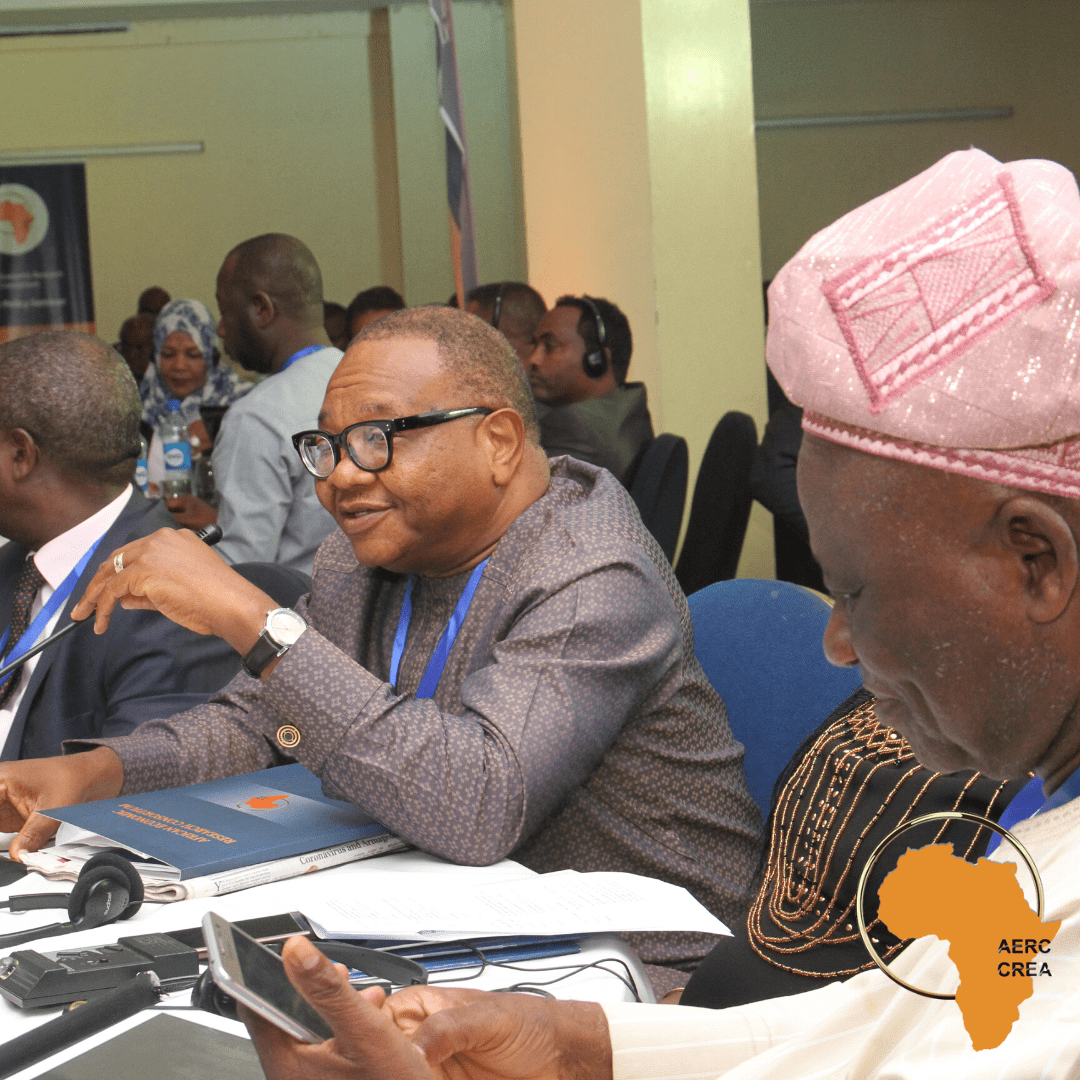
WAVING OR DROWNING? THE IMPACT OF COVID-19 ON EAST AFRICAN TRADE.

WAVING OR DROWNING? THE IMPACT OF COVID-19 ON EAST AFRICAN TRADE.

The COVID-19 flagship report launch demonstrates TradeMark East Africa, United Nations Economic Comission for Africa and the African Economic Research Consortiums commitment to a mutually beneficial partnership that informs their ongoing work, as well as policy-making in the region. The report provides recent evidence critical to supporting policy options, implementation, and direction on mitigatingthe adverse effects of the COVID-19 crisis in East Africa. For example, the report includes policy insights on short-term measures that governments in East Africa can institute to cushion economies and businesses during and after the pandemic.

Thus, the objectives of the launch event are:

  1. Inform our partners on the key findings of the report which provides evidence to inform policies and strategies countries could explore to cushion economies including sectors and businesses affected by the pandemic;
  2. Provide TMEA with a forum to communicate its Safe Trade interventions that support countries and businesses in the ongoing COVID-19 pandemic;
  3. Increase the visibility of UNECA, AERC and TMEAs roles in spearheading and generatingnew knowledge on regional integration matters;
  4. Communicate to UNECA, AERC and TMEA stakeholders and general public data-driven evidence on implications of the COVID-19 crisis on regional trade and broadly on EAC economies.

Click Here To Read The Full Report

The Impact of Covid-19 on Food Security in Africa

The Impact of Covid-19 on Food Security in Africa

The COVID-19 pandemic has affected all sectors of economies globally. Here in Africa, the crisis has drastically impacted food security. Supply chains, food and nutrition security, as well as current and future production functions, have been negatively impacted by a host of factors related to the COVID- 19 crisis. Food security is a basic human need and basic requirement for survival in difficult times. Several studies of food policies, food security and nutrition outcomes in Africa seem to show that lack of access to sufficient nutritious food leads to health problems including under- nourishment, immune deficiencies, stunting, illnesses and higher child mortality rates.

The onset of the COVID-19 crisis has exponentially increased the continent’s food security problems. Food supply chain distribution networks have been severely constrained. The numerous negative impacts of the health crisis are having a compound effect on all facets of food security, including food production, safety and distribution. Regional lockdowns, curfews, closures of markets, restrictions on border crossings and movement limitation measures (while necessary for public health and safety concerns), hamper the functioning of the agricultural sector, and Small to Medium Enterprise (SMEs) that make up the continent’s supply chain backbone. These restrictions exacerbate food insecurity and nutritional deficits issues across Africa, affecting:

Agriculture: The inability to perform normal farming and agricultural processes has led to crop losses and food shortages. This affects communities.

Manufacturing: The manufacturing sector across all industries, including food production, has been hit hard. The COVID-19 outbreak has led to business interruptions, which have had a domino effect on economies: business owners suffer economic difficulties, which then lead to employee cut-backs, job losses and even complete shutdowns of companies. Job losses then lead to communities suffering financial struggles impeding access to sufficient and nutritious food.

Distribution: A major impediment to food security is limited distribution options. The COVID-19 pandemic has interrupted all aspects of the food supply chain, including the logistics related to food handling and distribution. Even when food supplies are available, there are barriers for it reaching consumers, most especially due to movement restrictions imposed to reduce the spread of the virus.

While the COVID-19 health crisis has had an immeasurable adverse effect on food security in Africa, it is vital to remember that food scarcity was an existing issue pre-crisis. The crisis is amplifying and aggravating prevalent problems such as severe poverty, poor infrastructure, insufficient investment and resources, skills and knowledge deficiencies; and ineffectual policies related to the food and agriculture sectors in Africa. Additionally, it highlights the need to strengthen Africa’s agricultural and food manufacturing industries to reduce the reliance on food imports from outside the continent. The inability to import food due to logistic restrictions is causing further shortages as, according to The World Economic Forum (WEF), Africa is more dependent on externally sourced food imports than locally manufactured food.

African economies need to urgently examine solutions to help overcome the critical issue of food insecurity. This will require a collaborative approach by African governments, public and private sectors; and pooling of resources and sharing of knowledge aimed at alleviating the severe food insecurity situation. The African Economic Research Consortium (AERC), has undertaken numerous research projects and addressed this issue on several fora, including recently at the Senior Policy Seminar (held earlier this year in Abuja, Nigeria) on the theme “Agriculture and Food Policies for Better Nutrition Outcomes in Africa” . At the seminar, The Abuja Declaration, was adopted by senior policy makers from around Africa as an affirmation of their support of agriculture and food policies for improved nutrition outcomes in Africa.

AERC has implemented several activities focusing on Agriculture and Food Policies, most recently under the “Analysis of the Impact of Agricultural, Food and Nutrition Policies on Nutrition Outcomes in Africa” (AFPON) programme. This project seeks to contribute to the recent interest in leveraging agricultural development for improved nutrition by exploring the link between agricultural policies and nutrition outcomes in Africa. The research linked agricultural policies to nutrition outcomes such as stunting, wasting, anemia, child mortality, micronutrient deficiencies, obesity and malnutrition, among others. The study also attempted to understand, among other things, how gender access to productive agricultural resources, such as land, affect the nutrition of individuals and households in sub-Saharan African countries, how agricultural productivity, agricultural extension and advisory services affect nutrition outcomes; and establishing the policies and practices that would best improve food security and nutrition status.

AERC has also looked at the fragility of growth in African economies, health financing in Africa, climate change and growth in Africa, why poverty persist in Africa, the continent’s lack of growth, – inequality or poor redistribution or inclusive growth policies – as well as youth unemployment. Furthermore, the Africa rising narrative seems to be fading: Why? It is due to lack of capacity to sustain the policy environment to its conclusive end coupled with weak institutions that cannot define the appropriate incentive structures for sustainability.

The observation across African countries is an exacerbation of the already acute lack of food security, primarily due to extreme poverty, resulting from institutional and policy failure. Indeed, there are many potential reasons why supposedly well-crafted policies often fail to be adopted, and even when they are adopted, why they fail to achieve their desired objectives. It has been noted that policymakers often place excessive emphasis on “best practices,” at the expense of other factors such as commitment, coordination and cooperation, which are deemed plausible determinants of a successful policy. Also, the preponderance of power asymmetry (the unequal distribution of power) in the political arena contributes to policy failure as it facilitates resource diversion – through mechanisms such as clientelism – away from contributing to policy success.

Successful policy implementation can, however, be achieved by bringing about change in the incentives, preferences and beliefs of key players such as elites, citizens and international actors, as well as by creating space for contestability and participation. This may be achieved, as well, by reaching beyond institutional forms to address institutional functions – over and above capacity building – to alleviate power asymmetry, and beyond the rule of law to address the role of law.

To succeed in overcoming African food security challenges, research and implementation need to be employed with regard to factors such as:

  • Agricultural, farm input and farming credit policies
  • Agricultural and food manufacture education systems
  • Food and nutrition policies
  • Government financial aid policies related to agriculture and nutrition
  • Local support and advisory services for the agriculture and food industries
  • Food and socio-economic aid to communities during and after the COVID-19 crisis

For robust and impactful change, the following need to form part of the policy matrix when it comes to Africa’s food, agriculture, and nutrition goals:

  • Supply Chain Protection: Emphasis on protecting supply chains from any form of disruptions in the short term. This is especially so with countries going through lockdown, and the need for facilitated border crossing through a coordinated approach of testing and social distancing measures being employed
  • Protection of Private Investment: Outright measures to protect private investment – they will be crucial for now and the future recovery process
  • African Market Development: Outright measures to protect and develop markets – they will be needed in the medium term for speedy economic recovery
  • Fiscal Space Building Efforts: African economies should re-negotiate external debt serving to postponement for least a year. This will preserve liquidity/expenditure and support a build-up of fiscal space that will assist most economies in Africa to ride over the current shocks
  • Food Reserves: A key way in which African economies can build resilience to mitigate and manage shocks is to create buffers – with one vital safeguard being strategic food reserves. As previously emphasized to policymakers in discussions on this subject, Africa’s short-term crisis relates to food self-sufficiency, and the current heavy reliance on rain-fed agriculture is a precarious practice. Food reserves will be required as a buffer to support adjustment in times of drought and subsequent famines that put pressure on fiscal reserves, as well as for other crisis situations.
  • Digital Technology and Innovation: The use of the digital technology and the digital space to move enterprise activities forward. So far, in most countries, the deployment and use of digital technology in the financial services, government e-services and online learning has supported most socio-economic activities. This is still a 4th Industrial Revolution narrative, but it has become useful and applicable in the current pandemic. Thus far, it has been used by governments on targeted social protection programs. In successful countries, we have seen a range of services driven by a financial services revolution, enabling governments to implement e-governance strategies to better provide a range of services and opportunities to beneficiaries of public programs, business, taxpayers and investors, as well as dynamizing the private sector.

At the same time, even as it contributes to strengthening state capacity, the digital revolution makes new demands on the state in order to consolidate current and future successes: some of which include improving in-country and cross-continental connectivity, ensuring a fully inter-operable electronic payment platforms and implementing measures to strengthen consumer protection. Finally, the focus for the future is on a transition to a fully digital identification (e-ID) system across all African economies. This way, economies’ future economic and institutional recovery from the pandemic and other negative outcomes will be driven by the 4th Industrial Revolution – with firmly entrenched roots.

As stated by Albert Zeufack, World Bank Chief Economist for Africa: “In addition to containment measures, we have seen that in responding to COVID-19, countries are opting for a combination of emergency fiscal and monetary policy actions – with many central banks in the region taking important actions such as cutting interest rates and providing extraordinary liquidity assistance. However, it is important to ensure that fiscal policy builds in space for social protection interventions, especially targeting workers in the informal sector, and sows the seed for future resilience of our economies.”

Long term and sustainable remedies include capacity building at institutional, regional, country and continental levels. Such capacity building includes research and training that drives credible and reliable evidence-based economic policy making related to food, agriculture and nutrition in Africa. Such capacity will build and strengthen institutions for policy sustainability – be it fiscal or monetary policy, food security or market developments. All have one important dimension to success and sustainability, namely: Capacity.

AERC Biannual Research Workshop for June 2020

AERC Biannual Research Workshop for June 2020

African Economic Research Consortium (AERC) is pleased to announce its Biannual Research Workshop to be held virtually through Zoom video conferencing from 8-12 June 2020.

The Biannual is unique – combining learning-by-doing research, peer review, mentoring and networking to build and strengthen the capacity of early career African researchers. The workshop will bring together economists from around the African continent and globally, fulfilling one of our major core mandates – to strengthen local capacity for conducting independent, rigorous inquiry into problems facing the management of economies in sub-Saharan Africa.

The Concurrent Sessions

Five days of concurrent sessions that covers five Thematic Groups will run from 8-12 June 2020. An agenda agreed upon by Group Chairs and the AERC Secretariat will be shared shortly with all the researchers and the Resource Persons.

The presentations in the Thematic Groups will feature research proposals, work in progress, final research reports, and PhD thesis post-field reports.

The five Thematic Groups cover focal areas of AERC’s thematic research programme:

  • Group A: Poverty, Labour Markets, and Income Distribution
  • Group B: Macroeconomic Policy and Growth
  • Group C: Finance and Resource Mobilization
  • Group D: Production, Trade and Economic Integration
  • Group E: Agriculture, Climate Change and Natural Resource Management

In the past, AERC Biannual Research workshops have attracted over 200 researchers, academics, policy makers and other economists who participate in our Research and Training Programmes. This time round the numbers will be fewer because the event will be purely virtual given challenges in movement as a result of the novel Corona Virus Disease (COVID-19), which was declared a pandemic by World Health Organization (WHO).

The workshop provides a forum for participants to meet within a worldwide network of professionals to address issues relevant for Africa’s economic development.  This provides the researchers with opportunities to apply such research ideas and policy outcome to individual countries. They also provide an opportunity for monitoring the progress and quality of the various research projects sponsored by AERC.

The 52nd Plenary Session

Following the concurrent sessions, the 52nd Plenary Session on “Business Environment, Competitiveness, and Economic Growth in Africa” will take place later in June, 2020. Researchers, academics, policy makers, non-state actors and economists will discuss the issue of competitiveness of African economies and the ramifications for development regionally and globally. More details on the AERC 52nd Plenary Session to follow shortly.

The Consequential Impacts of The Covid-19 Crisis and Fragile Growth in Africa

The Consequential Impacts of The Covid-19 Crisis and Fragile Growth in Africa

The Consequential Impacts of The Covid-19 Crisis and Fragile Growth in Africa

Despite decent economic and social progress achieved in the last two decades, growth in most African countries remain characteristically fragile. This inherent fragility extends across the economic, social, political and cultural fabrics of life in Africa. The typology of the fragile context revolves around political instability, weak institutions that lead to poor accountability and leadership, civil and political unrest, low human development , low investment levels and the low level of economic diversification that produces protracted economic decline with a negative shock from one sector of the economy, among many other factors.

In fact, the African Economic Research Consortium (AERC) Senior Policy Seminar held in 2019 placed a spotlight on fragility of growth in African economies, and brought together high level decision-makers and key players to deliberate on underlying causes and potential solutions. The goal of the convening was to stimulate informed policy dialogue and related policy-making aimed at reducing identified fragile contexts and building a more resilient African economic sector. Some of the findings and recommendations to curbing fragility and stimulating resilient growth within African economies that resulted from the convening include (but is not limited to) the following:

  • Unless the underlying factors perpetuating economic exclusion are addressed, fragile contexts will remain and push for a form of fragility threat – even with growth. Economic growth cannot eliminate fragility without being significantly inclusive of all population groups.
  • Democratisation is one of the most important policy levers for reducing fragility as it has both a direct impact on fragility, as well as indirectly influences the underlying causes of economic exclusion.
  • Efforts to reduce fragility should focus on reducing poverty and inequality. Part of this include an increase in the general levels of income and this is where market developments and inclusive development seem to score very well.
  • When assessing the job market, the quality of employment (not just the number of people employed) is key. Enhancing human-capital based aspects contribute to decreasing fragility measures.
  • Fiscal factors that affect fragility include infrastructure endowment, export levels, direct foreign investment, inflation, trade tariffs and government spending. Again, economic inclusion and trade facilitation are pivotal in positively influencing fiscal space and health.
  • Economic diversification to reduce the level of reliance on natural resources will help boost Gross Domestic Product (GDP) stability and progress in fragile states, in fact economic diversification seem to solve to a large extent the problem of inclusivity.
  • In fragile countries with high levels of government social spending, the focus should be on the quality of spending, not just budgetary allocation.

However, no one was prepared for the current COVID-19 health crisis and the catastrophic effect it is having on the African economies as well as the global economy. Social and economic issues that were already highly challenging have now become exponentially more serious, posing a critical threat to future growth, and even survival of African economic systems in the aftermath of the crisis. While the COVID-19 outbreak has had a severe negative effect on all socio-political elements, it has highlighted the following key weak points as the most significant contributors to the extent of damage the African continent:

  • Fiscal systems: Existing weaknesses in the fiscal systems of African economies are being amplified. Fiscal systems were already under pressure due to constrained taxation bases and taxation policies, and the debt situation within African economies. Adding to the tenuous climate were global disruptions such as the United States-China tensions, the effect of Brexit developments on African supply chains and trade processes; and related financial flow difficulties. The current global crisis has intensified pre-existing problematic policy and trade issues prevalent within African fiscal systems even prior to the outbreak, as well as added countless more complications – the sum total of which, is yet to be seen.
  • The Digital Divide: The digital divide between Africa and developed regions has never been more evident. As the world is suddenly thrust into a situation where digitally-driven communication and processes is the only option, the need for accessible and reliable internet and affordable data have now proven to be essential public services – not luxuries. African regions with poor infrastructure in this regard will experience the harshest outcomes of the current crisis, but disruptive solutions will emerge. Those countries, like Kenya, who had embraced the electronic payments system suing e-money, will find themselves with an advantage of even designing new payments systems to protect the economy as well as social protection money transfer programs. But even with such virtual program design, informal systems in African economies makes it a challenge to know where the vulnerable groups are, and how to reach them, – this brings a new dimension of data/information on citizens and its governance to allow utilization for positive development program designs.
  • Healthcare Systems: African healthcare systems are known to be predominantly inadequate to deal with the basic healthcare needs of the population. Despite persistent calls for transformation, this sector has not received the support and prioritisation required. The current pandemic has revealed the shocking state of African healthcare in various regions, including lack of basic resources (such as protective wear for medical professionals and the ability to safely “house” patients within suitable medical environments). In addition, the glaring lack of adequate laboratory testing ability and capacity threatens to exacerbate the spread of infections. These inefficiencies have severely impeded efforts to contain the virus.
  • Human Capital: The COVID-19 crisis has highlighted the risks of not investing in skills development and learning infrastructures. This applies both to the schooling systems and professional education structures. With schools closed, most African communities have no access to educational material due to lack of infrastructure, including digitisation. On the other hand, many working professionals who may have access to digital tools, do not have the skills to effectively carry out tasks remotely during “lockdown” and curfew periods. These skills shortages are worsening the consequences that the virus is having on the economic and educational sectors, which were already causes for concern in Africa
  • Urban Infrastructure: The spotlight has been placed on poor urban infrastructures, such as overcrowded and unregulated public transportation systems, as well as extremely weak social welfare systems – all of which (arguably) have contributed to the rapid spread of the virus and governments’ inability to contain in-country epidemics. Efficient public transport system is a cornerstone of urban development and expanding cities. Allowing atomistic, disorganized small public transport system is a recipe for chaos in the African cities. This is a lesson to be picked up after this health crisis.

Although the effects of the coronavirus pandemic are devastating on already fragile African economies, the outlook is not completely dire. In order to move forward, we need to look at the lessons learnt from this crisis and heed the urgency for change that it has highlighted. Weak points, some known, others underestimated, have been brought to the fore. In addition to infrastructural issues, the reliance of African markets on imported goods (and services) has proven to be a detrimental factor during this crisis – particularly with regard to the shortage of masks and other health and safety resources typically sourced from outside Africa. This supports on-going efforts such as the intra-African trade agreement, aimed at bolstering African trade and development across all sectors, including manufacturing and distribution. The emphasis here is one of allowing domestic production capabilities to take root supported by strong institutional make up that support international trade and regional integration.

African decision-makers, including policymakers, need to use this as a framework to build capacity for sustainability that will strengthen socio-economic development across the continent. There is an urgent need for solutions that will move the continent forward, reduce risk and maximise on opportunities in the wake of the COVID-19 crisis. Proposed means of achieving this include:

  • Policy-making and interventions that take into account the existing weaknesses within African economies, the post-crisis challenges facing the continent and future long-term methodologies to forestall the negative effects of crises
  • Making use of existing research for planning and policy-making. Investing in research driven by the objectives of practical implementation within African economic sectors. In this line of action, dialogue to optimize on optimal solutions is important to push the practical policy choices
  • Enlisting the support of multilateral institutions and bi-lateral partners, and working together to develop comprehensive and effective solutions to overcoming challenges across different sectors. This includes supporting existing initiatives centred on building partnerships, such as the African Development Bank’s efforts to bring together various development finance institutes with an aim to strengthen private investment contributions into fragile economies
  • Going back to the drawing board and re-assessing the dynamics of health financing. What can be done differently to improve the healthcare industry across Africa? Solutions include partnerships between public and private sector organisations, as well as regional healthcare policy revisions that benefit those who need it the most. There is a market for efficient health care systems. India has discovered this. The next important step is how to make this market work.
  • Governments and the private sector need to consider ways to help the population and African markets recover from the debilitating effects of COVID-19 on factors such as GDP growth, critical macro-economic indicators, inflation, exchange rates, employment and livelihoods to vulnerable sectors. There are sectors that will emerge from the crisis stronger – like the pharmaceutical and health care system, education system that allow digital platform interventions, entertainments, e-commerce, e-government services and virtual banking and payments systems, research and dissemination systems. But to drive the economies, these sectors must evolve with permanently disruptive solutions. They will drive recovery after the crisis.
  • The implementation of the African Continental Free Trade Area agreement needs to be accelerated. This will boost intra-African trade, development and economic diversification, making African economies less vulnerable to economic shocks and more resilient to global crises or market disruptions.
  • Related to the point above, resuscitate the African domestic supply market. For example, the African textile industry has lost market share to imported goods over the years – now is the time to look for ways to revive the African manufacturing sector in a viable and sustainable way.
  • The need for skills development can no longer be ignored. Education across all levels (including all stages of schooling and professional roles) has to be prioritised. This includes specialised and digital skills. The value of investing in human resources should not be underestimated. Research also must be dedicated to the future of work, and the creation of new job roles and suitably trained professionals to fulfil these roles.
  • Investment in innovation, entrepreneurship, digitisation and agile business operations is imperative. Rigid and purely traditional businesses approaches mean that companies cannot respond or adapt quickly enough to changing business environments, such as that of a crisis – inevitably leading to economic ruin for those who are unable to evolve accordingly. Governments need to look at ways to help businesses to transition.

How Africa reacts in the aftermath of this social and economic crisis will be definitive in guiding the recovery and inclusive growth of the continent. We cannot predict the future, but we can certainly be better prepared for the uncertainties that lie ahead.

Decisive, research-driven and solution-orientated steps need to be taken to turn adversity into opportunity. While the full effects of the crisis are yet to be seen, those in the driving seat need to start taking action now to mitigate the negative impacts and work towards building and strengthening the continent. Africa will rise from this battle, with the potential to be stronger than ever.

Abuja Declaration

ABUJA DECLARATION

Senior African Policy Makers Reaffirm the Critical Role of Agriculture and Food Policies for Nutrition Outcomes in Africa

At a Senior Policy Seminar held in Abuja, Nigeria on 10 March 2020, and hosted by the African Economic Research Consortium (AERC) in partnership the Central Bank of Nigeria (CBN) and supported by the Bill and Melinda Gates Foundation (BMGF) focusing on the theme, “Agriculture and Food Policies for Improved Nutrition Outcomes in Africa,” senior policy makers from around the continent adopted a declaration as an affirmation of their strong commitment to supporting agricultural and food systems for enhanced human capital development.

We African Senior Policy Makers assembled at the AERC Senior Policy Seminar,

Affirming that food and nutrition security is part of a larger nexus of development challenges and opportunities,

Recognizing that making agriculture more nutrition-sensitive ought to be promoted as a sustainable solution to the triple burden of malnutrition (undernutrition, overnutrition and micronutrient deficiency) facing African countries,

Further recognizing the implications of ongoing demographic, epidemiologic and nutrition transitions as well as their implications and consequences for Africa’s malnutrition burden on child mortality, education outcomes, healthcare system and labour productivity,

Commending governments across Africa for realizing the importance of increasing shares of national budgets to agriculture, health and nutrition,

Noting that appropriate incentives and nutrition education are critical for households to consume appropriate diets and adopt productivity as well as income-enhancing technologies and practices that drive agricultural development and broader economic and social transformation,

Further noting that several structural conditions generate obstacles to such increased consumption and adoption, most notably inadequate early-life nutrition, food prices, affordability and accessibility of nutritious foods through the life cycle, low income and education levels, including critical information gaps,

Mindful that the nutritional needs of women and children require special attention,

Also mindful of the need to address expanded access to land through secure tenure,credit, markets, and financial services,

Appreciating the urgent need for policy reforms and institutional innovation to overcome these obstacles, with an emphasis on stronger implementation,

Acknowledging the importance of tackling problems related to the triple burden of malnutrition through an explicitly integrated approach focusing on agriculture, rural development and food security,

  1. Affirm that preventing malnutrition and improving nutrition requires a multi- sectoral and integrated approach to implementing nutrition-sensitive agriculture and food security policies and strategies, engaging multi- stakeholders and promoting their concerted actions, and responding effectively to the challenges, and that Central Banks can play a critical role in furthering inclusion of households and small-scale enterprises in financial markets;
  2. Commend the partnership between African Economic Research Consortium (AERC) and partner development agencies and institutions to strengthen the evidence base for policy and programme design and implementation for tackling malnutrition, urging them to continue to work to develop a practical, but cutting-edge Research and Development agenda to address policy and programming challenges on accelerating better nutrition outcomes;
  3. Take note of the promise of improving early life nutrition, diet quality, food environments as well as increasing income and education as approaches towards encouraging African households to enhance their nutrition status and well-being;
  4. Commit to create enabling environments for adoption of yield-enhancing technologies, seize market opportunities, raise incomes and enhance nutritional status and well-being, and
  5. Further commit to undertake consultations within our own Governments, both national and sub-national, to explore scope for employing demand-led approaches within public food procurement programmes, thereby promoting healthy diets, nutritional outcomes and human capital development for inclusive and sustainable growth and broader transformation.

Statement on COVID-19 Measures

AERC STATEMENT ON COVID-19 MEASURES

Dear Network Members,

My thoughts are with each of you as we navigate this difficult time together.

African Economic Research Consortium (AERC) has been monitoring the developments of COVID-19 globally, following guidance from both the Kenyan Government and the World Health Organization as the situation changes here in Kenya.

At this time, we are continuing our operations; however, we anticipate closing our offices as the situation warrants, enabling our staff to work from their homes.

The following external activities and events have been postponed.

  • University monitoring, all universities
  • INCLUDE/IDRC/ILO Conference, April, Benin
  • AERC/A4NH conference, June, Malawi
  • IEA meeting, June, Bali

The following events are under review. We will provide further guidance in April. Participants are requested to hold on travel plans until that guidance is communicated by AERC.

  • Mid-review Workshop for Framework Research under the “Climate Change and Economic Development in Africa” (CCEDA) project, 30 May, Kenya
  • Biannual Plenary and Research Workshop, 31 May to 4 June, Kenya
  • Final Review Workshop for Framework Research under the “Re-examining the Growth, Poverty, Inequality and Redistribution Relationships in Africa” (GPIR) project, 5 June, Kenya
  • Academic Advisory Board meetings, May, Location TBD
  • Joint Facility for Electives (JFE), June-August, Kenya
  • Shared Facility for Specialization and Electives (SFSE), August-November, South Africa

We will continue to update you on our operating status. If you have any questions, please do not hesitate to contact us at communications@aercafrica.org.

Thank you for your patience and understanding. We wish you and your families much fortitude over the coming months.

Kind Regards,

Prof Njuguna Ndung’u
Executive Director

Alumni Achievements

ALUMNI ACHIEVEMENTS: RECENT APPOINTMENTS IN LIBERIA, NIGERIA AND SOUTH AFRICA

Deputy Governor for Economic Policy of Central Bank of Liberia, Chief Economic Advisor for Oyo State in Nigeria, and Member Appointment, Presidential Economic Advisory Council, South Africa

Please join us in congratulating alumni Dr. Musa Dukuly and Dr. Musibau Babatunde on their appointments, and our founder Professor Benno Ndulu.

If you are an alumni of our research, training our policy outreach programmes, please visit our alumni page to join our network.

Dr Musa Dukuly

AERC Research Member Appointed as Deputy Governor of Liberia

The President of Liberia, His Excellency Dr. George Manneh Weah, on 18 June 2019, nominated Dr. Musa Dukuly as Deputy Governor of the Central Bank of Liberia for Economic Policy. He was successfully confirmed by the Senate in July 2019 and officially appointed to commence duty at the Bank, where he has so far exhibited exuberance, full commitment and professionalism in the handling of responsibilities.

Prior to his appointment, Dr. Dukuly served as Principal Economist with the ECOWAS West African Monetary Agency (WAMA), based in Freetown, Sierra Leone. He joined WAMA in March 2013 as Senior Economist, rising through the ranks to become a Principal Economist with the assigned responsibilities of performing macroeconomic assessments to Cabo Verde, Gambia, Ghana, Liberia, Nigeria and Sierra Leone under the ECOWAS Monetary Cooperation Programme (EMCP) to inform the Multilateral Convergence Mechanism of the region.

He previously worked as National Consultant on the Poverty Reduction Strategy of Liberia, especially on the Poverty Diagnostics (PD), Participatory Poverty Assessment (PPA), through the United Nations Development Programme (UNDP) that engendered the process of debt waiver for Liberia in 2010. Essentially, he played economic advisory role to Madam Ellen Johnson Sirleaf at the Ministry of State (2011-2013) through the John Snow Institute Scott Fellowship.

Dr Dukuly obtained his Doctor of Philosophy (PhD) degree in Economics from the University of Nairobi in 2012 with the focus of his thesis on financial development of SMEs in post-war environment, significantly investigating the simultaneous factors of the qualitative and quantitative drivers of SMEs credit participation, identifying diverse credit constraints and eliciting factor for credit default. He served as a part-time lecturer of development economics at the University of Nairobi in Kenya (2010-2011), United Methodist University (Liberia) in 2012 and full time at the University of Liberia (2007-2012).

He is a research network member of Africa’s top economic think tank research group, African Economic Research Consortium, Nairobi, Kenya with a publication entitled: Access to Credit in Urban Liberia: Double Hurdle Approach and also accredited with other discussion papers, including, Macroeconomic Implications of Ebola: Peripheral View on Liberia (TLC Africa/Perspectives, 2015), Credit Transmission Mechanism of Liberia’s Central Bank: Is it Pro- poor? (Theoretical Discussion, Perspectives-2013), Liberia’s Middle Income Momentum: Ten Economic Commandments (March, 2013); Liberia Economic Nationalism: Be Wary of Salary Increment (Observer 2012), Staggering from Inflation and Mounting Deficits in Liberia: Non- parametric Analysis (2012); Envisioning Liberia’s Development Vision: Pre-conditioning Perspective (TLCAFRICA).

Gov Seyi Makinde of Oyo State, Nigeria, has approved the appointment of Dr Musibau Babatunde, an Economist from the University of Ibadan, as his Chief Economic Adviser

“Mr Taiwo Adisa, the governor’s Chief Press Secretary, said in a statement on Tuesday in Ibadan that the appointment was with “immediate effect”. The News Agency of Nigeria (NAN) reports that the governor’s 4-point Development Agenda is aimed at expanding the economic frontiers of the state. Adisa said that the governor’s appointment of an economic adviser, was to enhance the successes already achieved and help to turn around the economy of the state.

Dr. Musibau Babatunde is a recipient of the African Economic Research Consortium (AERC), Nairobi, Collaborative PhD Scholarship Award for African Scholars.”

Dr Musibau Babatunde
Professor Benno Ndulu

Former Bank of Tanzania Governor Professor Ndulu Appointed Economic Advisor of South African President

“South African President Cyril Ramaphosa on Friday, September 27, appointed former Bank of Tanzania (BoT) governor Professor Benno Ndulu as a member of the new Presidential Economic Advisory Council. Professor Ndulu is best known for his involvement in setting up and developing one of the most effective research and training networks in Africa, African Economic Research Consortium.”

Senior Policy Seminar XXI Report

SENIOR POLICY SEMINAR REPORT: FRAGILITY OF GROWTH IN AFRICAN ECONOMIES

AERC’S Senior Policy Seminar XXI, that was partly funded under the International Development Research Centre (IDRC) grant, was a resounding success. The conference took place in Harare, Zimbabwe, which was fitting given the progress the country is making after the economic crisis it went through for several years. The country’s protracted fiscal imbalances have constrained development expenditure and social service provision, undermining poverty reduction efforts. Unemployment pressures have been mounting as employment opportunities continue to dwindle. Zimbabwe has opportunities requiring minimal additional investment to realize medium-term growth targets. This was the twenty first senior policy seminar in the series, and the event was hosted in partnership with the Reserve Bank of Zimbabwe.

During the senior policy seminar, policy makers, researchers and other stakeholders engaged in uninterrupted deliberations on a set of important issues considered significant to policy in the region. In addition, the SPS provided a platform for a focused dialogue amongst African policy makers, thus facilitating peer learning and sharing of ideas and experiences. The seminar format insulates the policy makers from pressures related to their responsibilities and, thus, creates an environment for lively professional discourse on the selected theme. Furthermore, because the dialogue and deliberations are underpinned by solid and rigorous research by AERC network researchers, the SPS provides a window for AERC research to influence policy in the continent. At the same time, the SPS provides opportunities for AERC to receive feedback from policy makers on key policy-related issues requiring further research for informed policy making in viii Africa. The SPS thus provides an opportunity for the research to influence and advise policy making in the region.

Read the full report  https://aercafrica.org/wp-content/uploads/2019/07/SPS-XXI-REPORT-JUNE-2019.pdf

AERC Research Featured In an International Journal

AERC RESEARCH PUBLISHED BY WILEY

Wiley Special Issue: Fragility and Development in Africa

With the generous support of IDRC / CRDI, AERC research has been featured in a special issue of the Review of Development Economics: Fragility and Development in Africa, published by Wiley, they are:

The Anatomy of Fragile States in sub‐Saharan Africa: Understanding the interrelationship between fragility and indicators of well-being, by Andy McKay and Erik Thorbecke

Fragility and Development in Africa: An introduction, by Anke Hoeffler

Macroeconomic Consequences of State Fragility in sub‐Saharan Africa, by Chuku Chuku and Kenneth Onye

Post‐conflict Stabilization in Africa, by Anke Hoeffler

Growth in Fragile States in Africa: Conflict and post‐conflict capital accumulation, by Janvier D. Nkurunziza

The issue is open access and available at the link below.

https://onlinelibrary.wiley.com/toc/14679361/2019/23/3

50th Biannual Plenary and Research Workshop- Synopsis

50th Biannual plenary

and research workshop SYNOPSIS

Cape Town,  South Africa

2-6 June 2019

African Economic Research Consortium ( AERC ) is pleased to share the success of its Biannual Plenary and Research Workshop held in Cape Town, South Africa, 2-6 June 2019.

The Biannual is unique – combining learning-by-doing research, peer review, mentoring and networking to build and strengthen the capacity of early career African researchers. The workshop brought together many economists from around the African continent and globally fulfilling one of our major mandates – to strengthen local capacity for conducting independent, rigorous inquiry into problems facing the management of economies in sub-Saharan Africa.

The 50th Plenary Session

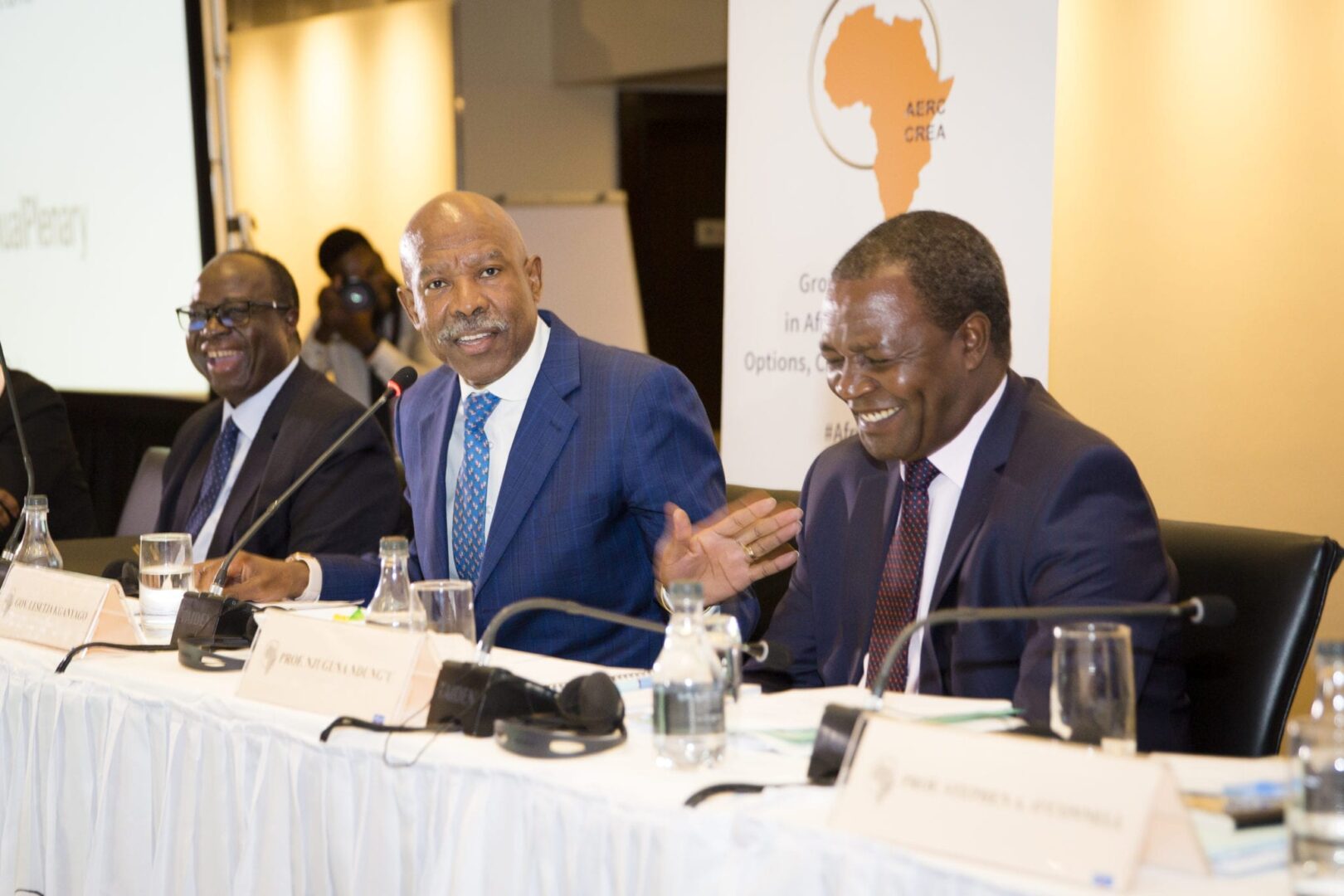
The first day of the workshop, Sunday 2 June 2019,  featured the 50th Plenary Session on Growing with Debt in African Economic Economies: Options, Challenge and Pitfalls.

Over 200 researchers, academics, policy makers, non-state actors and economists discussed the issue of growing with debt in African economies and the ramifications for development regionally and globally.

In case you missed the biannual plenary, the recordings can be found in the following links:
Part 1: https://www.facebook.com/aercafrica/videos/715150045580798/
Part 2: https://www.facebook.com/aercafrica/videos/450459632386336/

Three days of five concurrent sessions ran from 3-5 June 2019, with 6 June 2019 dedicated to technical sessions, where individual researchers interacted with resource persons , discussed their presentation and received feedback on improving the quality of their research.

The Concurrent Sessions

The five concurrent sessions of the Biannual started on Monday, 3 June 2019 and featured nearly 90 presentations of research proposals, work in progress documents, final reports and PhD thesis post-field reports.

The reports covered a wide range of topics that fit into the five focal areas of AERC’s thematic research programme:

  • Group A: Poverty, Labour Markets and Income Distribution
  • Group B: Macroeconomic Policy and Growth
  • Group C: Finance and Resource Mobilization
  • Group D: Production, Trade and Economic Integration
  • Group E: Agriculture, Climate Change and Natural Resource Management

The Biannual attracts over 200 researchers, academics, policy makers and other economists who participate in our Research and Training Programmes. It provides a forum for participants to meet within a worldwide network of professionals to address issues relevant for Africa’s economic development. They also provide an opportunity for monitoring the progress and quality of the various research projects sponsored by AERC.

African Economic Research Consortium
Get in touch

3rd Floor, Middle East Bank Towers Building, Jakaya Kikwete Road, Nairobi, Kenya
Phone: +254 722 205272
+254 20 2734150
Fax: +254 20 2734170

Go Social
Subscribe to our Newsletter