WAVING OR DROWNING? THE IMPACT OF COVID-19 ON EAST AFRICAN TRADE.

WAVING OR DROWNING? THE IMPACT OF COVID-19 ON EAST AFRICAN TRADE.

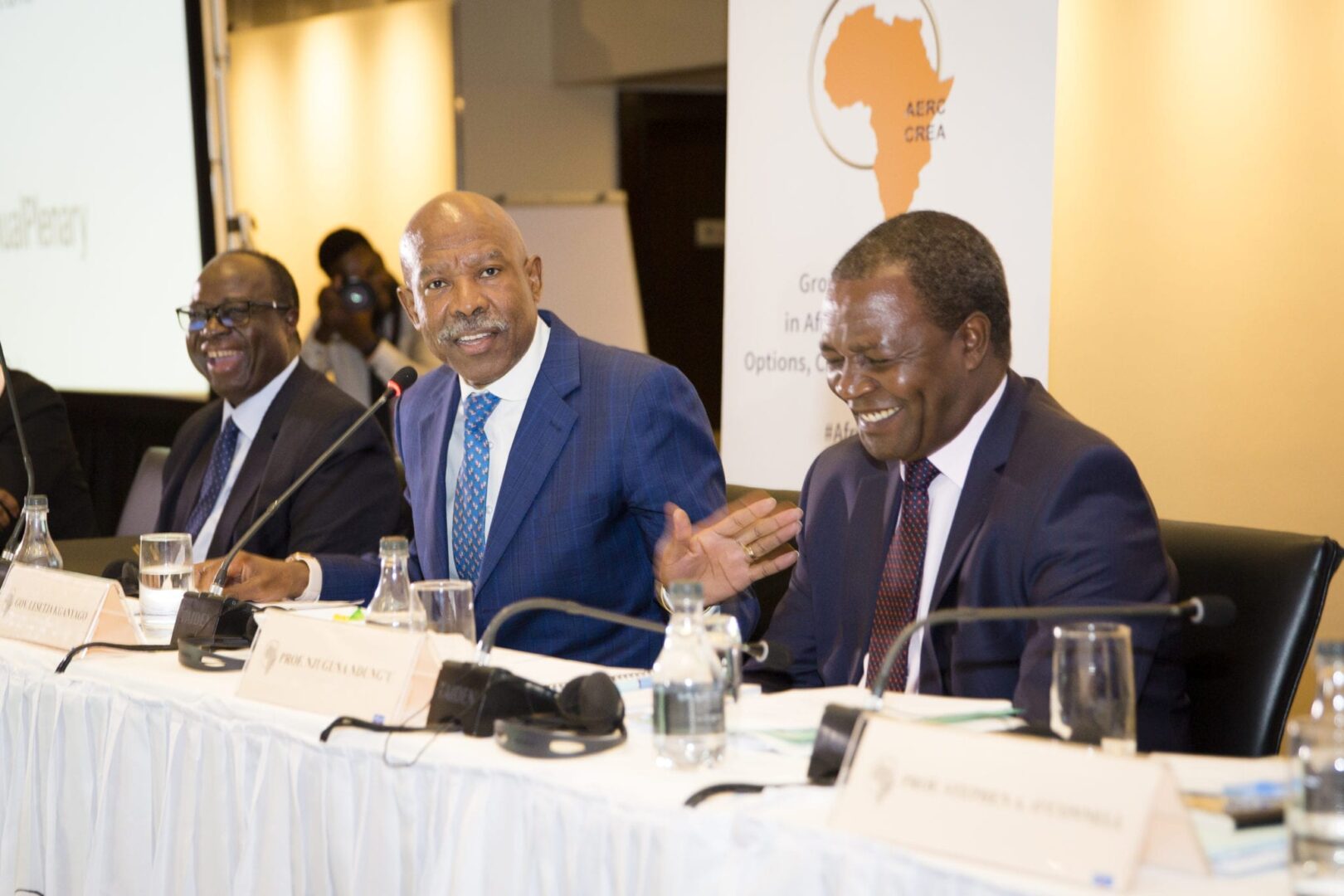
The COVID-19 flagship report launch demonstrates TradeMark East Africa, United Nations Economic Comission for Africa and the African Economic Research Consortiums commitment to a mutually beneficial partnership that informs their ongoing work, as well as policy-making in the region. The report provides recent evidence critical to supporting policy options, implementation, and direction on mitigatingthe adverse effects of the COVID-19 crisis in East Africa. For example, the report includes policy insights on short-term measures that governments in East Africa can institute to cushion economies and businesses during and after the pandemic.

Thus, the objectives of the launch event are:

  1. Inform our partners on the key findings of the report which provides evidence to inform policies and strategies countries could explore to cushion economies including sectors and businesses affected by the pandemic;
  2. Provide TMEA with a forum to communicate its Safe Trade interventions that support countries and businesses in the ongoing COVID-19 pandemic;
  3. Increase the visibility of UNECA, AERC and TMEAs roles in spearheading and generatingnew knowledge on regional integration matters;
  4. Communicate to UNECA, AERC and TMEA stakeholders and general public data-driven evidence on implications of the COVID-19 crisis on regional trade and broadly on EAC economies.

Click Here To Read The Full Report

AERC Biannual Research Workshop for June 2020

AERC Biannual Research Workshop for June 2020

African Economic Research Consortium (AERC) is pleased to announce its Biannual Research Workshop to be held virtually through Zoom video conferencing from 8-12 June 2020.

The Biannual is unique – combining learning-by-doing research, peer review, mentoring and networking to build and strengthen the capacity of early career African researchers. The workshop will bring together economists from around the African continent and globally, fulfilling one of our major core mandates – to strengthen local capacity for conducting independent, rigorous inquiry into problems facing the management of economies in sub-Saharan Africa.

The Concurrent Sessions

Five days of concurrent sessions that covers five Thematic Groups will run from 8-12 June 2020. An agenda agreed upon by Group Chairs and the AERC Secretariat will be shared shortly with all the researchers and the Resource Persons.

The presentations in the Thematic Groups will feature research proposals, work in progress, final research reports, and PhD thesis post-field reports.

The five Thematic Groups cover focal areas of AERC’s thematic research programme:

  • Group A: Poverty, Labour Markets, and Income Distribution
  • Group B: Macroeconomic Policy and Growth
  • Group C: Finance and Resource Mobilization
  • Group D: Production, Trade and Economic Integration
  • Group E: Agriculture, Climate Change and Natural Resource Management

In the past, AERC Biannual Research workshops have attracted over 200 researchers, academics, policy makers and other economists who participate in our Research and Training Programmes. This time round the numbers will be fewer because the event will be purely virtual given challenges in movement as a result of the novel Corona Virus Disease (COVID-19), which was declared a pandemic by World Health Organization (WHO).

The workshop provides a forum for participants to meet within a worldwide network of professionals to address issues relevant for Africa’s economic development.  This provides the researchers with opportunities to apply such research ideas and policy outcome to individual countries. They also provide an opportunity for monitoring the progress and quality of the various research projects sponsored by AERC.

The 52nd Plenary Session

Following the concurrent sessions, the 52nd Plenary Session on “Business Environment, Competitiveness, and Economic Growth in Africa” will take place later in June, 2020. Researchers, academics, policy makers, non-state actors and economists will discuss the issue of competitiveness of African economies and the ramifications for development regionally and globally. More details on the AERC 52nd Plenary Session to follow shortly.

Alumni Achievements

ALUMNI ACHIEVEMENTS: RECENT APPOINTMENTS IN LIBERIA, NIGERIA AND SOUTH AFRICA

Deputy Governor for Economic Policy of Central Bank of Liberia, Chief Economic Advisor for Oyo State in Nigeria, and Member Appointment, Presidential Economic Advisory Council, South Africa

Please join us in congratulating alumni Dr. Musa Dukuly and Dr. Musibau Babatunde on their appointments, and our founder Professor Benno Ndulu.

If you are an alumni of our research, training our policy outreach programmes, please visit our alumni page to join our network.

Dr Musa Dukuly

AERC Research Member Appointed as Deputy Governor of Liberia

The President of Liberia, His Excellency Dr. George Manneh Weah, on 18 June 2019, nominated Dr. Musa Dukuly as Deputy Governor of the Central Bank of Liberia for Economic Policy. He was successfully confirmed by the Senate in July 2019 and officially appointed to commence duty at the Bank, where he has so far exhibited exuberance, full commitment and professionalism in the handling of responsibilities.

Prior to his appointment, Dr. Dukuly served as Principal Economist with the ECOWAS West African Monetary Agency (WAMA), based in Freetown, Sierra Leone. He joined WAMA in March 2013 as Senior Economist, rising through the ranks to become a Principal Economist with the assigned responsibilities of performing macroeconomic assessments to Cabo Verde, Gambia, Ghana, Liberia, Nigeria and Sierra Leone under the ECOWAS Monetary Cooperation Programme (EMCP) to inform the Multilateral Convergence Mechanism of the region.

He previously worked as National Consultant on the Poverty Reduction Strategy of Liberia, especially on the Poverty Diagnostics (PD), Participatory Poverty Assessment (PPA), through the United Nations Development Programme (UNDP) that engendered the process of debt waiver for Liberia in 2010. Essentially, he played economic advisory role to Madam Ellen Johnson Sirleaf at the Ministry of State (2011-2013) through the John Snow Institute Scott Fellowship.

Dr Dukuly obtained his Doctor of Philosophy (PhD) degree in Economics from the University of Nairobi in 2012 with the focus of his thesis on financial development of SMEs in post-war environment, significantly investigating the simultaneous factors of the qualitative and quantitative drivers of SMEs credit participation, identifying diverse credit constraints and eliciting factor for credit default. He served as a part-time lecturer of development economics at the University of Nairobi in Kenya (2010-2011), United Methodist University (Liberia) in 2012 and full time at the University of Liberia (2007-2012).

He is a research network member of Africa’s top economic think tank research group, African Economic Research Consortium, Nairobi, Kenya with a publication entitled: Access to Credit in Urban Liberia: Double Hurdle Approach and also accredited with other discussion papers, including, Macroeconomic Implications of Ebola: Peripheral View on Liberia (TLC Africa/Perspectives, 2015), Credit Transmission Mechanism of Liberia’s Central Bank: Is it Pro- poor? (Theoretical Discussion, Perspectives-2013), Liberia’s Middle Income Momentum: Ten Economic Commandments (March, 2013); Liberia Economic Nationalism: Be Wary of Salary Increment (Observer 2012), Staggering from Inflation and Mounting Deficits in Liberia: Non- parametric Analysis (2012); Envisioning Liberia’s Development Vision: Pre-conditioning Perspective (TLCAFRICA).

Gov Seyi Makinde of Oyo State, Nigeria, has approved the appointment of Dr Musibau Babatunde, an Economist from the University of Ibadan, as his Chief Economic Adviser

“Mr Taiwo Adisa, the governor’s Chief Press Secretary, said in a statement on Tuesday in Ibadan that the appointment was with “immediate effect”. The News Agency of Nigeria (NAN) reports that the governor’s 4-point Development Agenda is aimed at expanding the economic frontiers of the state. Adisa said that the governor’s appointment of an economic adviser, was to enhance the successes already achieved and help to turn around the economy of the state.

Dr. Musibau Babatunde is a recipient of the African Economic Research Consortium (AERC), Nairobi, Collaborative PhD Scholarship Award for African Scholars.”

Dr Musibau Babatunde
Professor Benno Ndulu

Former Bank of Tanzania Governor Professor Ndulu Appointed Economic Advisor of South African President

“South African President Cyril Ramaphosa on Friday, September 27, appointed former Bank of Tanzania (BoT) governor Professor Benno Ndulu as a member of the new Presidential Economic Advisory Council. Professor Ndulu is best known for his involvement in setting up and developing one of the most effective research and training networks in Africa, African Economic Research Consortium.”

Senior Policy Seminar XXI Report

SENIOR POLICY SEMINAR REPORT: FRAGILITY OF GROWTH IN AFRICAN ECONOMIES

AERC’S Senior Policy Seminar XXI, that was partly funded under the International Development Research Centre (IDRC) grant, was a resounding success. The conference took place in Harare, Zimbabwe, which was fitting given the progress the country is making after the economic crisis it went through for several years. The country’s protracted fiscal imbalances have constrained development expenditure and social service provision, undermining poverty reduction efforts. Unemployment pressures have been mounting as employment opportunities continue to dwindle. Zimbabwe has opportunities requiring minimal additional investment to realize medium-term growth targets. This was the twenty first senior policy seminar in the series, and the event was hosted in partnership with the Reserve Bank of Zimbabwe.

During the senior policy seminar, policy makers, researchers and other stakeholders engaged in uninterrupted deliberations on a set of important issues considered significant to policy in the region. In addition, the SPS provided a platform for a focused dialogue amongst African policy makers, thus facilitating peer learning and sharing of ideas and experiences. The seminar format insulates the policy makers from pressures related to their responsibilities and, thus, creates an environment for lively professional discourse on the selected theme. Furthermore, because the dialogue and deliberations are underpinned by solid and rigorous research by AERC network researchers, the SPS provides a window for AERC research to influence policy in the continent. At the same time, the SPS provides opportunities for AERC to receive feedback from policy makers on key policy-related issues requiring further research for informed policy making in viii Africa. The SPS thus provides an opportunity for the research to influence and advise policy making in the region.

Read the full report  https://aercafrica.org/wp-content/uploads/2019/07/SPS-XXI-REPORT-JUNE-2019.pdf

AERC Research Featured In an International Journal

AERC RESEARCH PUBLISHED BY WILEY

Wiley Special Issue: Fragility and Development in Africa

With the generous support of IDRC / CRDI, AERC research has been featured in a special issue of the Review of Development Economics: Fragility and Development in Africa, published by Wiley, they are:

The Anatomy of Fragile States in sub‐Saharan Africa: Understanding the interrelationship between fragility and indicators of well-being, by Andy McKay and Erik Thorbecke

Fragility and Development in Africa: An introduction, by Anke Hoeffler

Macroeconomic Consequences of State Fragility in sub‐Saharan Africa, by Chuku Chuku and Kenneth Onye

Post‐conflict Stabilization in Africa, by Anke Hoeffler

Growth in Fragile States in Africa: Conflict and post‐conflict capital accumulation, by Janvier D. Nkurunziza

The issue is open access and available at the link below.

https://onlinelibrary.wiley.com/toc/14679361/2019/23/3

50th Biannual Plenary and Research Workshop- Synopsis

50th Biannual plenary

and research workshop SYNOPSIS

Cape Town,  South Africa

2-6 June 2019

African Economic Research Consortium ( AERC ) is pleased to share the success of its Biannual Plenary and Research Workshop held in Cape Town, South Africa, 2-6 June 2019.

The Biannual is unique – combining learning-by-doing research, peer review, mentoring and networking to build and strengthen the capacity of early career African researchers. The workshop brought together many economists from around the African continent and globally fulfilling one of our major mandates – to strengthen local capacity for conducting independent, rigorous inquiry into problems facing the management of economies in sub-Saharan Africa.

The 50th Plenary Session

The first day of the workshop, Sunday 2 June 2019,  featured the 50th Plenary Session on Growing with Debt in African Economic Economies: Options, Challenge and Pitfalls.

Over 200 researchers, academics, policy makers, non-state actors and economists discussed the issue of growing with debt in African economies and the ramifications for development regionally and globally.

In case you missed the biannual plenary, the recordings can be found in the following links:
Part 1: https://www.facebook.com/aercafrica/videos/715150045580798/
Part 2: https://www.facebook.com/aercafrica/videos/450459632386336/

Three days of five concurrent sessions ran from 3-5 June 2019, with 6 June 2019 dedicated to technical sessions, where individual researchers interacted with resource persons , discussed their presentation and received feedback on improving the quality of their research.

The Concurrent Sessions

The five concurrent sessions of the Biannual started on Monday, 3 June 2019 and featured nearly 90 presentations of research proposals, work in progress documents, final reports and PhD thesis post-field reports.

The reports covered a wide range of topics that fit into the five focal areas of AERC’s thematic research programme:

  • Group A: Poverty, Labour Markets and Income Distribution
  • Group B: Macroeconomic Policy and Growth
  • Group C: Finance and Resource Mobilization
  • Group D: Production, Trade and Economic Integration
  • Group E: Agriculture, Climate Change and Natural Resource Management

The Biannual attracts over 200 researchers, academics, policy makers and other economists who participate in our Research and Training Programmes. It provides a forum for participants to meet within a worldwide network of professionals to address issues relevant for Africa’s economic development. They also provide an opportunity for monitoring the progress and quality of the various research projects sponsored by AERC.

Agriculture for Nutrition and Health (ANH) Conference

AGRICULTURE FOR NUTRITION AND HEALTH CONFERENCE

From 24-28 June 2019, the 2019 Agriculture for Nutrition and Health (ANH) Conference will be held in Hyderabad, India . The conference involves learning labs where conference participants are taken through topical research analytical tools such as building implementation science for ANH; system dynamics in researching markets for nutrition; economic evaluation of multisectoral interventions; and Choice experiments for measuring intra-household dynamics and bargaining power, among others.

The conference also involves the dissemination of contributed research papers under the agriculture, nutrition and health themes. In this regard, three AERC-supported researchers, namely Josiah Ateka (Jomo Kenyatta University of Agriculture and Technology, Kenya), Rebecca Kiwanuka Lubinda (University of Zambia) and Stephen Thornhill (University College Cork, Ireland) will be presenting research papers supported by the AERC-Bill and Melinda Gates Foundation Agricultural Policy Analysis for Nutrition Outcomes (AFPON) project. The titles of the presentations are as follows:

The ANH conference will bring together the community of researchers and users of research (practitioners and policymakers) working at the intersection of agriculture, nutrition and health.The objective of the  conference is to foster knowledge exchange, innovation and learning around ANH research. Follow more on the conference at #ANH2019.

The AFPON project is part of our CMAAE programme which builds capacity to conduct policy research in agricultural and applied economics to address food security, agricultural productivity and environmental management.

Growing with Debt in African Economies: Options, Challenges and Pitfalls

50th Biannual plenary

and research workshop

Cape Town, South Africa

2-6 June 2019

African Economic Research Consortium (AERC) is pleased to announce the next Biannual Plenary and Research Workshop to be held in Cape Town, South Africa, 2-6 June 2019.

The Biannual is unique – combining learning-by-doing research, peer review, mentoring and networking to build and strengthen the capacity of early career African researchers. The workshop brings together many economists from around the African continent and globally fulfilling one of our major mandates – to strengthen local capacity for conducting independent, rigorous inquiry into problems facing the management of economies in sub-Saharan Africa.

AERC organizes two biannual research workshops annually in June and December. For full details, please visit our event portal: www.aercafricaevents.org

The 50th Plenary Session

The first day of the workshop, Sunday 2 June 2019, will feature the 50th Plenary Session on Growing with Debt in African Economic Economies: Options, Challenge and Pitfalls.

Over 200 researchers, academics, policy makers, non-state actors and economists will discuss the issue of growing with debt in African economies and the ramifications for development regionally and globally.

Three days of five concurrent sessions will run from 3-5 June 2019, with 6 June 2019 dedicated to technical sessions, where individual researchers interact with resource persons to discuss their presentation and to receive feedback on improving the quality of their research.

The Concurrent Sessions

The five concurrent sessions of the Biannual start on Monday, 3 June 2019 and will feature nearly 90 presentations of research proposals, work in progress documents, final reports and PhD thesis post-field reports.

The reports will cover a wide range of topics that fit into the five focal areas of AERC’s thematic research programme:

  • Group A: Poverty, Labour Markets and Income Distribution
  • Group B: Macroeconomic Policy and Growth
  • Group C: Finance and Resource Mobilization
  • Group D: Production, Trade and Economic Integration
  • Group E: Agriculture, Climate Change and Natural Resource Management

The Biannual attracts over 200 researchers, academics, policy makers and other economists who participate in our Research and Training Programmes. It provides a forum for participants to meet within a worldwide network of professionals to address issues relevant for Africa’s economic development. They also provide an opportunity for monitoring the progress and quality of the various research projects sponsored by AERC.

Mid-Review Workshop: Impact of Agricultural and Food Policies on Nutrition Outcomes

MID-REVIEW WORKSHOP:

impact of agricultural and food policies on Nutrition outcomes

From 23-24 April 2019, fifteen research teams conducting country case studies under the collaborative research project on Impact of Agricultural and Food Policies on Nutrition Outcomes in Africa (AFPON) presented their work in progress at a workshop held in Nairobi, Kenya. This was the second meeting for the project after the inception and capacity building workshop that was convened in October 2018 in Nairobi; the fifteen studies were commissioned out of the twenty promising proposals  that were presented.

Acting on behalf of the Executive Director, Prof. Njuguna Ndung’u, the Director of Research welcomed the participants to the meeting and urged the researchers to utilize the two days in harvesting ideas, comments and suggestions for improvement of draft reports.

During the workshop, each team received feedback from peers who acted as discussants as well as from the Project Steering Committee that consists of Prof. David Sahn of Cornell University (Coordinator/Chair), Dr. Esi Colecraft of University of Ghana and Prof. Germano Mwabu of Kenyatta University.

Upon careful review of the proposals by the three technical experts, it was agreed that the teams finalize the drafts reports and develop policy briefs within three months. The two outputs will be submitted to the secretariat and the steering committee for review before convening for the final review workshop in August/September 2019.

2019 Senior Policy Seminar

harare declaration on

fragility of growth in african economies

Senior Policy Makers Reaffirm the Need to Address Fragility of Growth in African Economies for Economic Transformation

At the Senior Policy Seminar XXI, held in Harare, Zimbabwe, on 21-22 March 2019, hosted by the African Economic Research Consortium (AERC), in partnership with the Reserve Bank of Zimbabwe (RBZ) and the Macroeconomic and Financial Management Institute of Eastern and Southern Africa (MEFMI) on the theme: Fragility of Growth in African Economies, Senior Policy Makers and other stakeholders, private sector, international organizations, academia and civil society, from around the continent adopted a declaration as an affirmation of their strong commitment to reversing fragility in African economies through inclusive growth, development and governance.

Declaration, Harare, March 22, 2019

We, African Senior Policy Makers and other stakeholders, private sector, international organizations, academia and civil society actors assembled here at the AERC Senior Policy Seminar XXI, held in partnership with the Reserve Bank of Zimbabwe (RBZ) and the Macroeconomic and Financial Management Institute of Eastern and Southern Africa (MEFMI),

Recognising that fragility is on the rise in Africa, and that the sources of fragility of African economies are multifaceted, and include conflict and/or political instability, limited diversification of economies, climatic shocks, and youth unemployment, among others, and that fragility is detrimental to sustained robust growth;

Further recognizing that addressing fragility should be thought of comprehensively, not in isolation, but should include other initiatives such as regional integration, infrastructure development, international cooperation, technology, value chains, industrialization, capacity building, structural transformation, and effective policy frameworks;

Noting that fragility is gendered;

Also noting the vital role of pro-poor growth strategies for inclusive development, especially in such areas as raising agricultural productivity, provision of adequate infrastructure, social protection programmes, quality education and training, industrial development, technology and innovation and fostering dialogue and coordination among all relevant stakeholders;

Having also noted the commitments by African Heads of State and Government “.. not to bequeath the burden of conflict to the next generation of Africans, setting as an objective the elimination of all conflicts by 2020; expressing their determination to anchor African societies, Governments and institutions on respect for the rule of law, human rights and dignity, popular participation, the management of diversity, as well as inclusion and democracy; and committed themselves to place the African people at the centre of the Union’s endeavours and to eradicate poverty;[1];

Also, further recalling African Union’s several communiqués and press statements on the need to build peace and security in Africa as a pre-requisite for economic growth and development;

1. Call for renewed efforts towards the implementation of the AU Policy Framework for Post-Conflict Reconstruction and Development (PCRD), adopted by the 9th Ordinary Session of the Executive Council held in Banjul, The Gambia, from 25 to 29 June 2006 [EX.CL/Dec.302(IX)];

2. Take note of the important role that private sector entrepreneurs and philanthropists play in strengthening domestic resource mobilization and in channeling more investments for job creation and income generating activities in countries in fragile situations in Africa and those emerging from conflicts;

3.  Affirm that fragility of growth is a critical constraint to structural transformation for inclusive and sustainable development in Africa, and thus the realization of the sustainable development goals;

4. Further affirm the need to increase investment in knowledge generation, human capital development, institutional strengthening, digital innovation and technology, youth and women empowerment, and skills transfers to address regional imbalances and thus pave the way for reduced growth volatility and fragility in African economies;

5. Commend the critical role of African Economic Research Consortium (AERC) and its partner institutions, in capacity building for promoting evidence based policies and generating the knowledge basis for decision making on such key economic policy issues as growth resilience and development.

6. Recognize that many well-meaning declarations and strategies have largely not been executed, call for immediate action, and urgency in reversing fragility of African economies.

7. Commit to improve management of our natural resources, for the betterment of our citizens, and to leverage these natural resources to diversify our economies. This includes taking deliberate measures to reduce fragility of sectors such as agriculture.

8. Further commit to pursue inclusive growth and development policies and to build more peaceful and more cohesive societies buttressed by dialogue and openness.

9. And further commit to empowering women, youth and other agents of inclusive and resilient economic growth and development through agricultural and agro- industrialization policies and strategies adopted by African governments.

10. Decide to remain actively seized on the matter.                                                          


[1] “Solemn Declaration on the 50th Anniversary of the Organization of African Unity (OAU)/AU”, adopted by the Assembly of the Union, in Addis Ababa, on 25 May 2013, on the occasion of the Union’s Golden Jubilee [Assembly/AU/Decl.3(XXI)].

African Economic Research Consortium
Get in touch

3rd Floor, Middle East Bank Towers Building, Jakaya Kikwete Road, Nairobi, Kenya
Phone: +254 722 205272
+254 20 2734150
Fax: +254 20 2734170

Go Social
Subscribe to our Newsletter