Alumni Achievements

ALUMNI ACHIEVEMENTS: RECENT APPOINTMENTS IN LIBERIA, NIGERIA AND SOUTH AFRICA

Deputy Governor for Economic Policy of Central Bank of Liberia, Chief Economic Advisor for Oyo State in Nigeria, and Member Appointment, Presidential Economic Advisory Council, South Africa

Please join us in congratulating alumni Dr. Musa Dukuly and Dr. Musibau Babatunde on their appointments, and our founder Professor Benno Ndulu.

If you are an alumni of our research, training our policy outreach programmes, please visit our alumni page to join our network.

Dr Musa Dukuly

AERC Research Member Appointed as Deputy Governor of Liberia

The President of Liberia, His Excellency Dr. George Manneh Weah, on 18 June 2019, nominated Dr. Musa Dukuly as Deputy Governor of the Central Bank of Liberia for Economic Policy. He was successfully confirmed by the Senate in July 2019 and officially appointed to commence duty at the Bank, where he has so far exhibited exuberance, full commitment and professionalism in the handling of responsibilities.

Prior to his appointment, Dr. Dukuly served as Principal Economist with the ECOWAS West African Monetary Agency (WAMA), based in Freetown, Sierra Leone. He joined WAMA in March 2013 as Senior Economist, rising through the ranks to become a Principal Economist with the assigned responsibilities of performing macroeconomic assessments to Cabo Verde, Gambia, Ghana, Liberia, Nigeria and Sierra Leone under the ECOWAS Monetary Cooperation Programme (EMCP) to inform the Multilateral Convergence Mechanism of the region.

He previously worked as National Consultant on the Poverty Reduction Strategy of Liberia, especially on the Poverty Diagnostics (PD), Participatory Poverty Assessment (PPA), through the United Nations Development Programme (UNDP) that engendered the process of debt waiver for Liberia in 2010. Essentially, he played economic advisory role to Madam Ellen Johnson Sirleaf at the Ministry of State (2011-2013) through the John Snow Institute Scott Fellowship.

Dr Dukuly obtained his Doctor of Philosophy (PhD) degree in Economics from the University of Nairobi in 2012 with the focus of his thesis on financial development of SMEs in post-war environment, significantly investigating the simultaneous factors of the qualitative and quantitative drivers of SMEs credit participation, identifying diverse credit constraints and eliciting factor for credit default. He served as a part-time lecturer of development economics at the University of Nairobi in Kenya (2010-2011), United Methodist University (Liberia) in 2012 and full time at the University of Liberia (2007-2012).

He is a research network member of Africa’s top economic think tank research group, African Economic Research Consortium, Nairobi, Kenya with a publication entitled: Access to Credit in Urban Liberia: Double Hurdle Approach and also accredited with other discussion papers, including, Macroeconomic Implications of Ebola: Peripheral View on Liberia (TLC Africa/Perspectives, 2015), Credit Transmission Mechanism of Liberia’s Central Bank: Is it Pro- poor? (Theoretical Discussion, Perspectives-2013), Liberia’s Middle Income Momentum: Ten Economic Commandments (March, 2013); Liberia Economic Nationalism: Be Wary of Salary Increment (Observer 2012), Staggering from Inflation and Mounting Deficits in Liberia: Non- parametric Analysis (2012); Envisioning Liberia’s Development Vision: Pre-conditioning Perspective (TLCAFRICA).

Gov Seyi Makinde of Oyo State, Nigeria, has approved the appointment of Dr Musibau Babatunde, an Economist from the University of Ibadan, as his Chief Economic Adviser

“Mr Taiwo Adisa, the governor’s Chief Press Secretary, said in a statement on Tuesday in Ibadan that the appointment was with “immediate effect”. The News Agency of Nigeria (NAN) reports that the governor’s 4-point Development Agenda is aimed at expanding the economic frontiers of the state. Adisa said that the governor’s appointment of an economic adviser, was to enhance the successes already achieved and help to turn around the economy of the state.

Dr. Musibau Babatunde is a recipient of the African Economic Research Consortium (AERC), Nairobi, Collaborative PhD Scholarship Award for African Scholars.”

Dr Musibau Babatunde
Professor Benno Ndulu

Former Bank of Tanzania Governor Professor Ndulu Appointed Economic Advisor of South African President

“South African President Cyril Ramaphosa on Friday, September 27, appointed former Bank of Tanzania (BoT) governor Professor Benno Ndulu as a member of the new Presidential Economic Advisory Council. Professor Ndulu is best known for his involvement in setting up and developing one of the most effective research and training networks in Africa, African Economic Research Consortium.”

Senior Policy Seminar XXI Report

SENIOR POLICY SEMINAR REPORT: FRAGILITY OF GROWTH IN AFRICAN ECONOMIES

AERC’S Senior Policy Seminar XXI, that was partly funded under the International Development Research Centre (IDRC) grant, was a resounding success. The conference took place in Harare, Zimbabwe, which was fitting given the progress the country is making after the economic crisis it went through for several years. The country’s protracted fiscal imbalances have constrained development expenditure and social service provision, undermining poverty reduction efforts. Unemployment pressures have been mounting as employment opportunities continue to dwindle. Zimbabwe has opportunities requiring minimal additional investment to realize medium-term growth targets. This was the twenty first senior policy seminar in the series, and the event was hosted in partnership with the Reserve Bank of Zimbabwe.

During the senior policy seminar, policy makers, researchers and other stakeholders engaged in uninterrupted deliberations on a set of important issues considered significant to policy in the region. In addition, the SPS provided a platform for a focused dialogue amongst African policy makers, thus facilitating peer learning and sharing of ideas and experiences. The seminar format insulates the policy makers from pressures related to their responsibilities and, thus, creates an environment for lively professional discourse on the selected theme. Furthermore, because the dialogue and deliberations are underpinned by solid and rigorous research by AERC network researchers, the SPS provides a window for AERC research to influence policy in the continent. At the same time, the SPS provides opportunities for AERC to receive feedback from policy makers on key policy-related issues requiring further research for informed policy making in viii Africa. The SPS thus provides an opportunity for the research to influence and advise policy making in the region.

Read the full report  https://aercafrica.org/wp-content/uploads/2019/07/SPS-XXI-REPORT-JUNE-2019.pdf

AERC Research Featured In an International Journal

AERC RESEARCH PUBLISHED BY WILEY

Wiley Special Issue: Fragility and Development in Africa

With the generous support of IDRC / CRDI, AERC research has been featured in a special issue of the Review of Development Economics: Fragility and Development in Africa, published by Wiley, they are:

The Anatomy of Fragile States in sub‐Saharan Africa: Understanding the interrelationship between fragility and indicators of well-being, by Andy McKay and Erik Thorbecke

Fragility and Development in Africa: An introduction, by Anke Hoeffler

Macroeconomic Consequences of State Fragility in sub‐Saharan Africa, by Chuku Chuku and Kenneth Onye

Post‐conflict Stabilization in Africa, by Anke Hoeffler

Growth in Fragile States in Africa: Conflict and post‐conflict capital accumulation, by Janvier D. Nkurunziza

The issue is open access and available at the link below.

https://onlinelibrary.wiley.com/toc/14679361/2019/23/3

50th Biannual Plenary and Research Workshop- Synopsis

50th Biannual plenary

and research workshop SYNOPSIS

Cape Town,  South Africa

2-6 June 2019

African Economic Research Consortium ( AERC ) is pleased to share the success of its Biannual Plenary and Research Workshop held in Cape Town, South Africa, 2-6 June 2019.

The Biannual is unique – combining learning-by-doing research, peer review, mentoring and networking to build and strengthen the capacity of early career African researchers. The workshop brought together many economists from around the African continent and globally fulfilling one of our major mandates – to strengthen local capacity for conducting independent, rigorous inquiry into problems facing the management of economies in sub-Saharan Africa.

The 50th Plenary Session

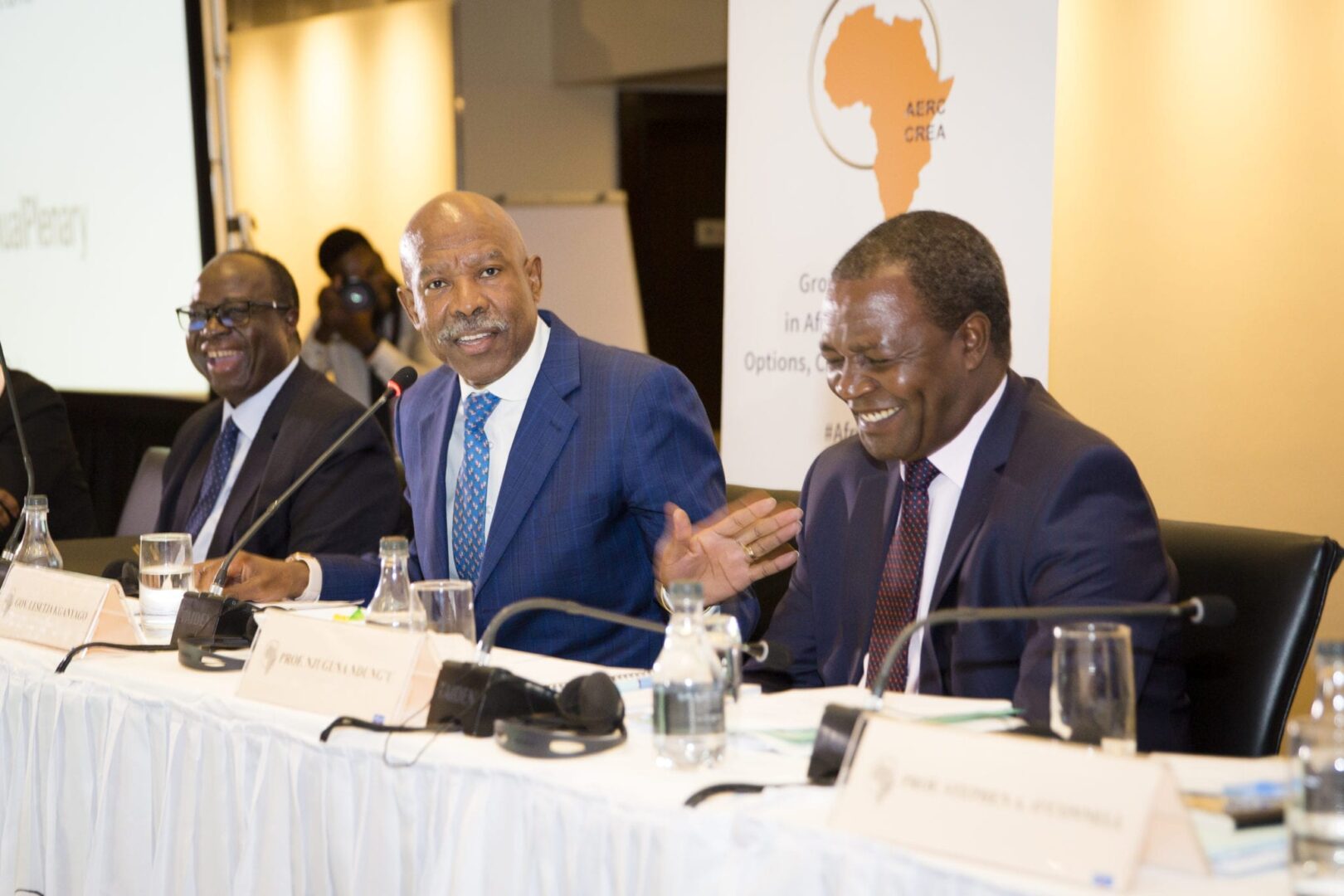
The first day of the workshop, Sunday 2 June 2019,  featured the 50th Plenary Session on Growing with Debt in African Economic Economies: Options, Challenge and Pitfalls.

Over 200 researchers, academics, policy makers, non-state actors and economists discussed the issue of growing with debt in African economies and the ramifications for development regionally and globally.

In case you missed the biannual plenary, the recordings can be found in the following links:
Part 1: https://www.facebook.com/aercafrica/videos/715150045580798/
Part 2: https://www.facebook.com/aercafrica/videos/450459632386336/

Three days of five concurrent sessions ran from 3-5 June 2019, with 6 June 2019 dedicated to technical sessions, where individual researchers interacted with resource persons , discussed their presentation and received feedback on improving the quality of their research.

The Concurrent Sessions

The five concurrent sessions of the Biannual started on Monday, 3 June 2019 and featured nearly 90 presentations of research proposals, work in progress documents, final reports and PhD thesis post-field reports.

The reports covered a wide range of topics that fit into the five focal areas of AERC’s thematic research programme:

  • Group A: Poverty, Labour Markets and Income Distribution
  • Group B: Macroeconomic Policy and Growth
  • Group C: Finance and Resource Mobilization
  • Group D: Production, Trade and Economic Integration
  • Group E: Agriculture, Climate Change and Natural Resource Management

The Biannual attracts over 200 researchers, academics, policy makers and other economists who participate in our Research and Training Programmes. It provides a forum for participants to meet within a worldwide network of professionals to address issues relevant for Africa’s economic development. They also provide an opportunity for monitoring the progress and quality of the various research projects sponsored by AERC.

Agriculture for Nutrition and Health (ANH) Conference

AGRICULTURE FOR NUTRITION AND HEALTH CONFERENCE

From 24-28 June 2019, the 2019 Agriculture for Nutrition and Health (ANH) Conference will be held in Hyderabad, India . The conference involves learning labs where conference participants are taken through topical research analytical tools such as building implementation science for ANH; system dynamics in researching markets for nutrition; economic evaluation of multisectoral interventions; and Choice experiments for measuring intra-household dynamics and bargaining power, among others.

The conference also involves the dissemination of contributed research papers under the agriculture, nutrition and health themes. In this regard, three AERC-supported researchers, namely Josiah Ateka (Jomo Kenyatta University of Agriculture and Technology, Kenya), Rebecca Kiwanuka Lubinda (University of Zambia) and Stephen Thornhill (University College Cork, Ireland) will be presenting research papers supported by the AERC-Bill and Melinda Gates Foundation Agricultural Policy Analysis for Nutrition Outcomes (AFPON) project. The titles of the presentations are as follows:

The ANH conference will bring together the community of researchers and users of research (practitioners and policymakers) working at the intersection of agriculture, nutrition and health.The objective of the  conference is to foster knowledge exchange, innovation and learning around ANH research. Follow more on the conference at #ANH2019.

The AFPON project is part of our CMAAE programme which builds capacity to conduct policy research in agricultural and applied economics to address food security, agricultural productivity and environmental management.

Growing with Debt in African Economies: Options, Challenges and Pitfalls

50th Biannual plenary

and research workshop

Cape Town, South Africa

2-6 June 2019

African Economic Research Consortium (AERC) is pleased to announce the next Biannual Plenary and Research Workshop to be held in Cape Town, South Africa, 2-6 June 2019.
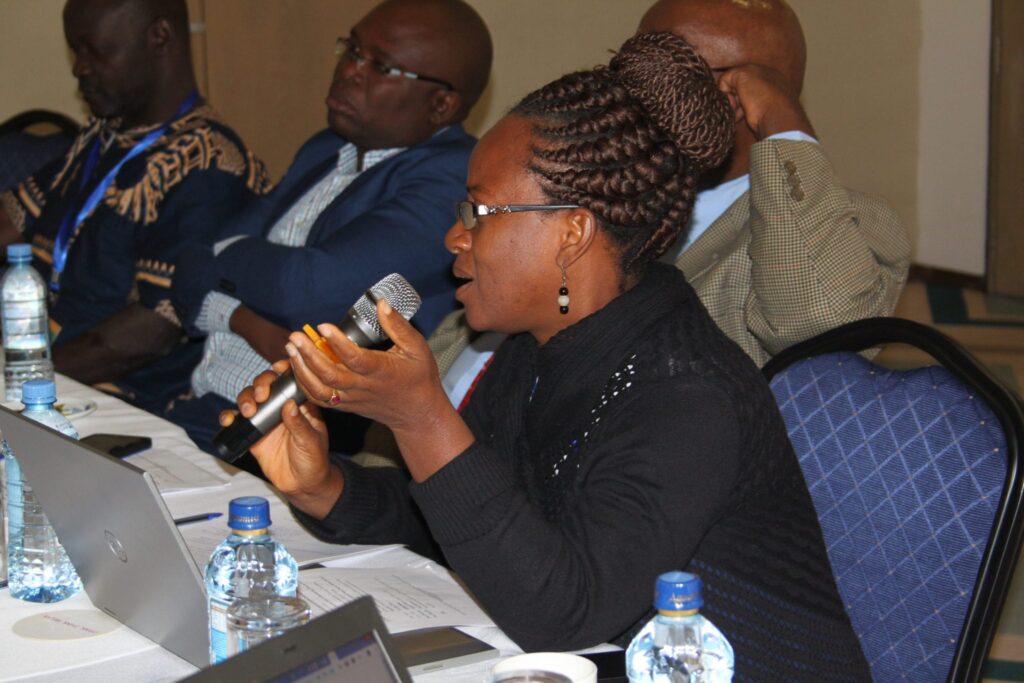
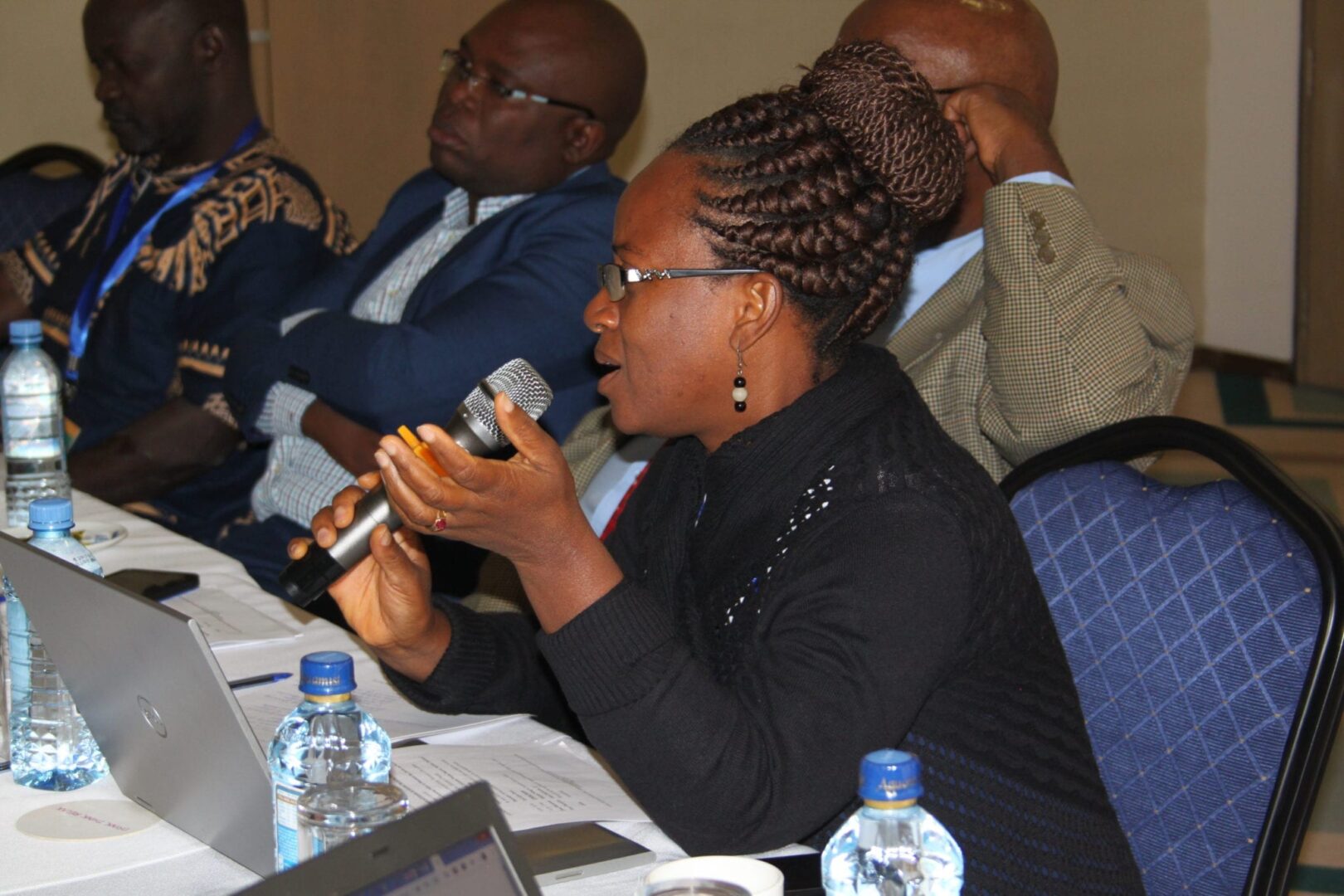
The Biannual is unique – combining learning-by-doing research, peer review, mentoring and networking to build and strengthen the capacity of early career African researchers. The workshop brings together many economists from around the African continent and globally fulfilling one of our major mandates – to strengthen local capacity for conducting independent, rigorous inquiry into problems facing the management of economies in sub-Saharan Africa.

AERC organizes two biannual research workshops annually in June and December. For full details, please visit our event portal: www.aercafricaevents.org

The 50th Plenary Session

The first day of the workshop, Sunday 2 June 2019, will feature the 50th Plenary Session on Growing with Debt in African Economic Economies: Options, Challenge and Pitfalls.

Over 200 researchers, academics, policy makers, non-state actors and economists will discuss the issue of growing with debt in African economies and the ramifications for development regionally and globally.

Three days of five concurrent sessions will run from 3-5 June 2019, with 6 June 2019 dedicated to technical sessions, where individual researchers interact with resource persons to discuss their presentation and to receive feedback on improving the quality of their research.

The Concurrent Sessions

The five concurrent sessions of the Biannual start on Monday, 3 June 2019 and will feature nearly 90 presentations of research proposals, work in progress documents, final reports and PhD thesis post-field reports.

The reports will cover a wide range of topics that fit into the five focal areas of AERC’s thematic research programme:

  • Group A: Poverty, Labour Markets and Income Distribution
  • Group B: Macroeconomic Policy and Growth
  • Group C: Finance and Resource Mobilization
  • Group D: Production, Trade and Economic Integration
  • Group E: Agriculture, Climate Change and Natural Resource Management

The Biannual attracts over 200 researchers, academics, policy makers and other economists who participate in our Research and Training Programmes. It provides a forum for participants to meet within a worldwide network of professionals to address issues relevant for Africa’s economic development. They also provide an opportunity for monitoring the progress and quality of the various research projects sponsored by AERC.

Mid-Review Workshop: Impact of Agricultural and Food Policies on Nutrition Outcomes

MID-REVIEW WORKSHOP:

impact of agricultural and food policies on Nutrition outcomes

From 23-24 April 2019, fifteen research teams conducting country case studies under the collaborative research project on Impact of Agricultural and Food Policies on Nutrition Outcomes in Africa (AFPON) presented their work in progress at a workshop held in Nairobi, Kenya. This was the second meeting for the project after the inception and capacity building workshop that was convened in October 2018 in Nairobi; the fifteen studies were commissioned out of the twenty promising proposals  that were presented.

Acting on behalf of the Executive Director, Prof. Njuguna Ndung’u, the Director of Research welcomed the participants to the meeting and urged the researchers to utilize the two days in harvesting ideas, comments and suggestions for improvement of draft reports.

During the workshop, each team received feedback from peers who acted as discussants as well as from the Project Steering Committee that consists of Prof. David Sahn of Cornell University (Coordinator/Chair), Dr. Esi Colecraft of University of Ghana and Prof. Germano Mwabu of Kenyatta University.

Upon careful review of the proposals by the three technical experts, it was agreed that the teams finalize the drafts reports and develop policy briefs within three months. The two outputs will be submitted to the secretariat and the steering committee for review before convening for the final review workshop in August/September 2019.

Research Workshops Recap

Trois ateliers de recherche
organisés à Nairobi
du 23 au 29 SEPTEMBRE 2018

Le CREA a organisé avec succès trois ateliers de recherche simultanés du 23 au 29 septembre :

Repenser l’intégration régionale pour un développement inclusif et durable – Phase-cadre

Atelier technique non étatique sur le suivi et l’évaluation

Repenser l’intégration régionale – Atelier de lancement d’études de cas par pays

Le programme de recherche du CREA repose sur quatre objectifs principaux :

Renforcer les capacités locales crédibles en matière de recherche orientée vers les politiques ;

Générer des résultats de recherche à l’usage des analystes des politiques et des décideurs ;

Promouvoir les relations entre la recherche et les politiques ; et

Encourager le maintien de chercheurs de grande qualité.

Repenser l’intégration régionale pour un développement inclusif et durable – Phase-cadre

L’intégration régionale constitue une priorité de développement pour l’Afrique. Le processus d’intégration de l’Afrique vers un continent de plus en plus connecté, concurrentiel et propice aux affaires est en cours, et sa feuille de route, dans certaines régions, est en cours de construction, comme en témoigne le récent accord conclu par les dirigeants africains sur la zone de libre-échange continentale africaine (ZLEC). En outre, la BAD a récemment mis au point une base de données centrale et un système permettant de collecter et de mesurer les progrès de l’Afrique qui est en mouvement. Les efforts fournis jusqu’à présent ont produit un Indice d’intégration régionale de l’Afrique, un outil d’action dans les récents développements politiques et opérationnels du continent.

Afin de faire progresser le programme d’intégration régionale, le CREA a lancé un nouveau projet de recherche collaboratif axé sur des problèmes auparavant inexplorés et sous-étudiés, y compris la ZLEC africaine. Le projet s’articule autour de cinq dimensions socio-économiques essentielles à l’intégration de l’Afrique : les infrastructures régionales, l’intégration commerciale, l’intégration des services, la libre circulation des personnes et l’intégration financière et macroéconomique. L’appel à documents-cadres pour ce projet a été envoyé en février 2017 et 24 propositions ont été enregistrées au total. Après examen, 12 propositions ont été sélectionnées et invitées pour l’atelier de lancement et de réflexion organisé en septembre 2017. Par la suite, le CREA a octroyé 12 subventions de recherche pour l’élaboration de documents-cadres.

Dans le cadre de la diffusion rapide des résultats de recherche issus de ce projet, trois projets de document ont été sélectionnés et présentés au vingtième séminaire de haut niveau sur les politiques du CREA (SPS XX) tenu les 12 et 13 mars 2018 à Kampala (Ouganda) sur le thème : « Repenser l’intégration régionale en Afrique ». Le séminaire a permis d’avoir un forum au cours duquel les décideurs de haut niveau des États de l’Afrique subsaharienne ont échangé leurs expériences et leurs opinions avec des chercheurs du réseau du CREA.

L’atelier de révision finale du projet – au cours duquel tous les documents-cadres ont été présentés – s’est tenu du 24 au 25 septembre, au cours des sessions suivantes :

Session 1 : Aide pour le commerce, accords commerciaux intrarégionaux et APE

Session 2 : Intégration de l’infrastructure et gouvernance

Session 3 : Économie politique, évaluations, concurrence et intégration régionale

Session 4 : Intégration agricole et marché des services de l’intégration

Une revue de recherche sera identifiée ou un volume de livre sera publié sur les 12 articles de recherche avec des recommandations politiques.

Atelier technique non étatique sur le suivi et l’évaluation

Le CREA met actuellement en œuvre une initiative financée par la Banque africaine de développement (BAD) intitulée Projet de renforcement des capacités de recherche et du savoir pour la transformation de l’Afrique, qui vise à développer les capacités en matière de recherche et de connaissances de différents constituants des États membres régionaux de la BAD. Les bénéficiaires de ce projet sont issus parmi les acteurs étatiques et non étatiques, ainsi que le personnel des communautés économiques régionales (CER) et le CREA lui-même.

Dans le cadre du projet ci-dessus, le CREA a engagé un consultant pour organiser un atelier technique visant à renforcer les capacités des acteurs non étatiques autour des programmes de suivi, d’évaluation et d’apprentissage (MEL). Les objectifs de l’atelier étaient de permettre aux participants de mieux comprendre la complémentarité des principes de la MEL ; et comment ces concepts peuvent être appliqués aux projets et programmes de MEL mis en œuvre par des acteurs non étatiques dans leur travail quotidien.

23 participants venus de 12 pays étaient présents, avec des femmes composant les 70 % de l’atelier.

Repenser l’intégration régionale – Atelier de lancement d’études de cas par pays

L’atelier est la deuxième phase du projet Repenser l’intégration régionale du CREA. Les participants venus de 15 pays du continent ont présenté des études de cas sur les thèmes suivants :

Session 1 : Ordre économique international et interdépendance économique

Session 2 : La zone de libre échange continentale africaine (ZLEC)

Session 3 : Intégration régionale et performance économique

Session 4 : Commerce, monnaie commune et UEMOA

Session 5 : Infrastructures, commerce intra-africain et productivité

Au total, 20 études de cas ont été présentées, dont 15 seront sélectionnées pour être développées et publiées ultérieurement dans un journal spécial intitulé Repenser l’intégration régionale.

African Economic Research Consortium
Get in touch

3rd Floor, Middle East Bank Towers Building, Jakaya Kikwete Road, Nairobi, Kenya
Phone: +254 722 205272
+254 20 2734150
Fax: +254 20 2734170

Go Social
Subscribe to our Newsletter