50th Biannual Plenary and Research Workshop- Synopsis

50th Biannual plenary

and research workshop SYNOPSIS

Cape Town,  South Africa

2-6 June 2019

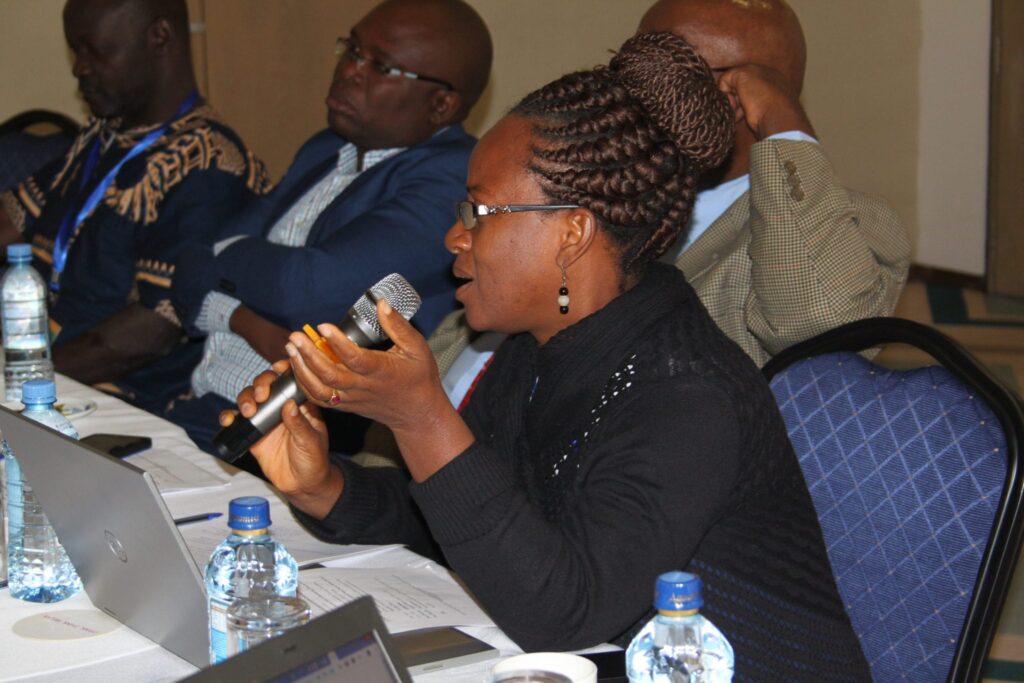
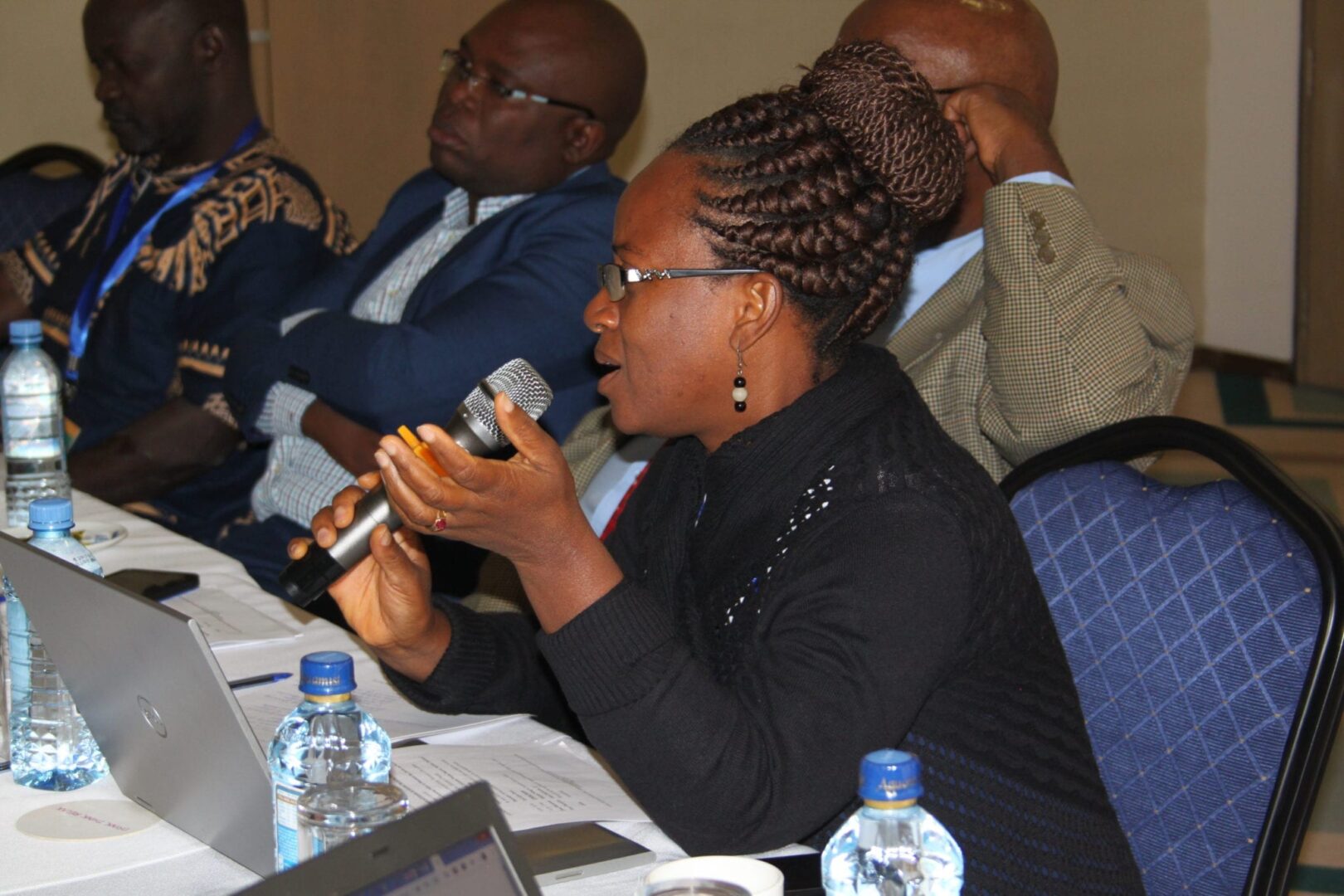
African Economic Research Consortium ( AERC ) is pleased to share the success of its Biannual Plenary and Research Workshop held in Cape Town, South Africa, 2-6 June 2019.

The Biannual is unique – combining learning-by-doing research, peer review, mentoring and networking to build and strengthen the capacity of early career African researchers. The workshop brought together many economists from around the African continent and globally fulfilling one of our major mandates – to strengthen local capacity for conducting independent, rigorous inquiry into problems facing the management of economies in sub-Saharan Africa.

The 50th Plenary Session

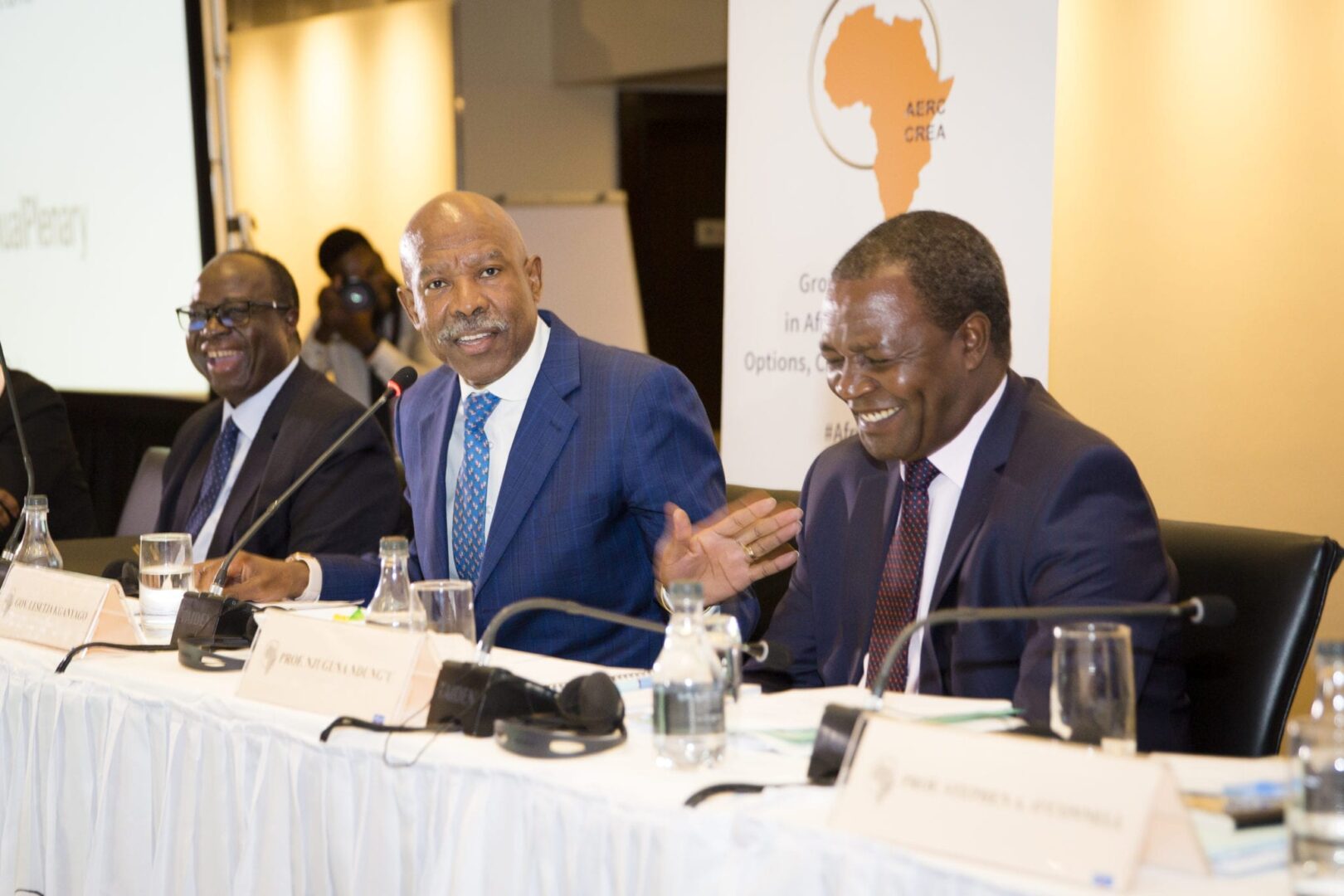
The first day of the workshop, Sunday 2 June 2019,  featured the 50th Plenary Session on Growing with Debt in African Economic Economies: Options, Challenge and Pitfalls.

Over 200 researchers, academics, policy makers, non-state actors and economists discussed the issue of growing with debt in African economies and the ramifications for development regionally and globally.

In case you missed the biannual plenary, the recordings can be found in the following links:
Part 1: https://www.facebook.com/aercafrica/videos/715150045580798/
Part 2: https://www.facebook.com/aercafrica/videos/450459632386336/

Three days of five concurrent sessions ran from 3-5 June 2019, with 6 June 2019 dedicated to technical sessions, where individual researchers interacted with resource persons , discussed their presentation and received feedback on improving the quality of their research.

The Concurrent Sessions

The five concurrent sessions of the Biannual started on Monday, 3 June 2019 and featured nearly 90 presentations of research proposals, work in progress documents, final reports and PhD thesis post-field reports.

The reports covered a wide range of topics that fit into the five focal areas of AERC’s thematic research programme:

  • Group A: Poverty, Labour Markets and Income Distribution
  • Group B: Macroeconomic Policy and Growth
  • Group C: Finance and Resource Mobilization
  • Group D: Production, Trade and Economic Integration
  • Group E: Agriculture, Climate Change and Natural Resource Management

The Biannual attracts over 200 researchers, academics, policy makers and other economists who participate in our Research and Training Programmes. It provides a forum for participants to meet within a worldwide network of professionals to address issues relevant for Africa’s economic development. They also provide an opportunity for monitoring the progress and quality of the various research projects sponsored by AERC.

Agriculture for Nutrition and Health (ANH) Conference

AGRICULTURE FOR NUTRITION AND HEALTH CONFERENCE

From 24-28 June 2019, the 2019 Agriculture for Nutrition and Health (ANH) Conference will be held in Hyderabad, India . The conference involves learning labs where conference participants are taken through topical research analytical tools such as building implementation science for ANH; system dynamics in researching markets for nutrition; economic evaluation of multisectoral interventions; and Choice experiments for measuring intra-household dynamics and bargaining power, among others.

The conference also involves the dissemination of contributed research papers under the agriculture, nutrition and health themes. In this regard, three AERC-supported researchers, namely Josiah Ateka (Jomo Kenyatta University of Agriculture and Technology, Kenya), Rebecca Kiwanuka Lubinda (University of Zambia) and Stephen Thornhill (University College Cork, Ireland) will be presenting research papers supported by the AERC-Bill and Melinda Gates Foundation Agricultural Policy Analysis for Nutrition Outcomes (AFPON) project. The titles of the presentations are as follows:

The ANH conference will bring together the community of researchers and users of research (practitioners and policymakers) working at the intersection of agriculture, nutrition and health.The objective of the  conference is to foster knowledge exchange, innovation and learning around ANH research. Follow more on the conference at #ANH2019.

The AFPON project is part of our CMAAE programme which builds capacity to conduct policy research in agricultural and applied economics to address food security, agricultural productivity and environmental management.

Growing with Debt in African Economies: Options, Challenges and Pitfalls

50th Biannual plenary

and research workshop

Cape Town, South Africa

2-6 June 2019

African Economic Research Consortium (AERC) is pleased to announce the next Biannual Plenary and Research Workshop to be held in Cape Town, South Africa, 2-6 June 2019.

The Biannual is unique – combining learning-by-doing research, peer review, mentoring and networking to build and strengthen the capacity of early career African researchers. The workshop brings together many economists from around the African continent and globally fulfilling one of our major mandates – to strengthen local capacity for conducting independent, rigorous inquiry into problems facing the management of economies in sub-Saharan Africa.

AERC organizes two biannual research workshops annually in June and December. For full details, please visit our event portal: www.aercafricaevents.org

The 50th Plenary Session

The first day of the workshop, Sunday 2 June 2019, will feature the 50th Plenary Session on Growing with Debt in African Economic Economies: Options, Challenge and Pitfalls.

Over 200 researchers, academics, policy makers, non-state actors and economists will discuss the issue of growing with debt in African economies and the ramifications for development regionally and globally.

Three days of five concurrent sessions will run from 3-5 June 2019, with 6 June 2019 dedicated to technical sessions, where individual researchers interact with resource persons to discuss their presentation and to receive feedback on improving the quality of their research.

The Concurrent Sessions

The five concurrent sessions of the Biannual start on Monday, 3 June 2019 and will feature nearly 90 presentations of research proposals, work in progress documents, final reports and PhD thesis post-field reports.

The reports will cover a wide range of topics that fit into the five focal areas of AERC’s thematic research programme:

  • Group A: Poverty, Labour Markets and Income Distribution
  • Group B: Macroeconomic Policy and Growth
  • Group C: Finance and Resource Mobilization
  • Group D: Production, Trade and Economic Integration
  • Group E: Agriculture, Climate Change and Natural Resource Management

The Biannual attracts over 200 researchers, academics, policy makers and other economists who participate in our Research and Training Programmes. It provides a forum for participants to meet within a worldwide network of professionals to address issues relevant for Africa’s economic development. They also provide an opportunity for monitoring the progress and quality of the various research projects sponsored by AERC.

Exchange Rate, Petroleum Price and Price Determination in Sierra Leone

Exchange Rate,

Petroleum Price and Price
Determination in
Sierra Leone

By B.I.B. Kargbo
Department of Research, Planning and Actuarial National Social Security and Insurance Trust
Sierra Leone

The Sierra Leone economy is a net importer with a chronic negative balance of trade. Imports as a percentage of GDP averaged 40.8% between 2001 and 2010. Imports of
food, mineral fuels and lubricants accounted for 50.8% of the total value of imports within the same period. Also, the value of the leone depreciated from Le 920.75 in 1996 to Le 4,000 in 2010 while inflation averaged 12.6% for the same period. As a result of the interplay of these forces, fuel prices are most times adjusted upwards to compensate for the depreciation of the leone against the dollar or to match up with increases in the world price of crude oil. This study determines the effects of monetary environment as well as exchange rate movement and petroleum prices on domestic prices in Sierra Leone by estimating a hybrid model of inflation in which inflation responds to its own lags, lags of other variables, and a set of error-correction terms that represent short run disequilibria from the money market, external sector and output that feed into the inflation process. The empirical results from the parsimonious model show that petroleum product prices and exchange rate, as well as monetary factors determine inflation in Sierra Leone. What is also significant from the findings is that the contribution of petroleum prices to domestic price formation is unfounded in the long run, meaning that it is only a short-run phenomenon. The results also support the view that a fair portion of fluctuations in domestic prices is driven by its own shocks.

Key words: Sierra Leone, Inflation, Pump Price, Exchange Rate.

Research Paper 353

Digital Payments and the New Economy

digital payments

and the new economy

African Economic Research Consortium’s Executive Director, Professor Njuguna Ndung’u, participated in a high-level regional workshop jointly organized by the Central Bank of Tunisia and the World Bank on “Digital Payments and the New Economy” on 23 April 2019 in Tunisia.

Professor Ndung’u shared his experiences while Central Bank Governor of Kenya. His tenure saw the rapid rise of Kenya in the financial inclusion space with global recognition stemming from the pioneering and transformative M-Pesa.

M-Pesa started in 2007 as an electronic money transfer product that enables users to store value on their mobile phones. It is based on a platform of electronic units of money that can be used for multiple purposes including transfers to other users, payments for goods and services, and conversion to and from cash.

M-Pesa and similar digital financial services are representative of the mobile banking revolution in Kenya: financial institutions have embraced M-Pesa as a platform to manage micro accounts, build customer deposits, and broaden their customer network. As a consequence, Kenya has emerged as a leader in financial inclusion in Sub-Saharan Africa.

For an insider’s view of the regulatory pathway that enabled Kenya’s digital financial services sector to thrive and develop, and draws some policy recommendations from the Kenyan case aimed at all policymakers that seek to catalyse and consolidate a mobile phone-based banking revolution in their respective jurisdictions, please download: M-Pesa, A Success Story of Digital Financial Inclusion 

Mid-Review Workshop: Impact of Agricultural and Food Policies on Nutrition Outcomes

MID-REVIEW WORKSHOP:

impact of agricultural and food policies on Nutrition outcomes

From 23-24 April 2019, fifteen research teams conducting country case studies under the collaborative research project on Impact of Agricultural and Food Policies on Nutrition Outcomes in Africa (AFPON) presented their work in progress at a workshop held in Nairobi, Kenya. This was the second meeting for the project after the inception and capacity building workshop that was convened in October 2018 in Nairobi; the fifteen studies were commissioned out of the twenty promising proposals  that were presented.

Acting on behalf of the Executive Director, Prof. Njuguna Ndung’u, the Director of Research welcomed the participants to the meeting and urged the researchers to utilize the two days in harvesting ideas, comments and suggestions for improvement of draft reports.

During the workshop, each team received feedback from peers who acted as discussants as well as from the Project Steering Committee that consists of Prof. David Sahn of Cornell University (Coordinator/Chair), Dr. Esi Colecraft of University of Ghana and Prof. Germano Mwabu of Kenyatta University.

Upon careful review of the proposals by the three technical experts, it was agreed that the teams finalize the drafts reports and develop policy briefs within three months. The two outputs will be submitted to the secretariat and the steering committee for review before convening for the final review workshop in August/September 2019.

Podcast on Financial Inclusion

Professor njuguna Ndung’u

featured on afronomics podcast

Professor Njuguna Ndung’u spoke with World Bank Chief Economist for Africa, Albert Zeufack, on 14 March 2019 to discuss M-Pesa and the rise of digital financial services in Africa.

This discussion was part of the  Afronomics podcast series that focuses on the most recent economic trends that are impacting growth and development.

2019 Senior Policy Seminar

harare declaration on

fragility of growth in african economies

Senior Policy Makers Reaffirm the Need to Address Fragility of Growth in African Economies for Economic Transformation

At the Senior Policy Seminar XXI, held in Harare, Zimbabwe, on 21-22 March 2019, hosted by the African Economic Research Consortium (AERC), in partnership with the Reserve Bank of Zimbabwe (RBZ) and the Macroeconomic and Financial Management Institute of Eastern and Southern Africa (MEFMI) on the theme: Fragility of Growth in African Economies, Senior Policy Makers and other stakeholders, private sector, international organizations, academia and civil society, from around the continent adopted a declaration as an affirmation of their strong commitment to reversing fragility in African economies through inclusive growth, development and governance.

Declaration, Harare, March 22, 2019

We, African Senior Policy Makers and other stakeholders, private sector, international organizations, academia and civil society actors assembled here at the AERC Senior Policy Seminar XXI, held in partnership with the Reserve Bank of Zimbabwe (RBZ) and the Macroeconomic and Financial Management Institute of Eastern and Southern Africa (MEFMI),

Recognising that fragility is on the rise in Africa, and that the sources of fragility of African economies are multifaceted, and include conflict and/or political instability, limited diversification of economies, climatic shocks, and youth unemployment, among others, and that fragility is detrimental to sustained robust growth;

Further recognizing that addressing fragility should be thought of comprehensively, not in isolation, but should include other initiatives such as regional integration, infrastructure development, international cooperation, technology, value chains, industrialization, capacity building, structural transformation, and effective policy frameworks;

Noting that fragility is gendered;

Also noting the vital role of pro-poor growth strategies for inclusive development, especially in such areas as raising agricultural productivity, provision of adequate infrastructure, social protection programmes, quality education and training, industrial development, technology and innovation and fostering dialogue and coordination among all relevant stakeholders;

Having also noted the commitments by African Heads of State and Government “.. not to bequeath the burden of conflict to the next generation of Africans, setting as an objective the elimination of all conflicts by 2020; expressing their determination to anchor African societies, Governments and institutions on respect for the rule of law, human rights and dignity, popular participation, the management of diversity, as well as inclusion and democracy; and committed themselves to place the African people at the centre of the Union’s endeavours and to eradicate poverty;[1];

Also, further recalling African Union’s several communiqués and press statements on the need to build peace and security in Africa as a pre-requisite for economic growth and development;

1. Call for renewed efforts towards the implementation of the AU Policy Framework for Post-Conflict Reconstruction and Development (PCRD), adopted by the 9th Ordinary Session of the Executive Council held in Banjul, The Gambia, from 25 to 29 June 2006 [EX.CL/Dec.302(IX)];

2. Take note of the important role that private sector entrepreneurs and philanthropists play in strengthening domestic resource mobilization and in channeling more investments for job creation and income generating activities in countries in fragile situations in Africa and those emerging from conflicts;

3.  Affirm that fragility of growth is a critical constraint to structural transformation for inclusive and sustainable development in Africa, and thus the realization of the sustainable development goals;

4. Further affirm the need to increase investment in knowledge generation, human capital development, institutional strengthening, digital innovation and technology, youth and women empowerment, and skills transfers to address regional imbalances and thus pave the way for reduced growth volatility and fragility in African economies;

5. Commend the critical role of African Economic Research Consortium (AERC) and its partner institutions, in capacity building for promoting evidence based policies and generating the knowledge basis for decision making on such key economic policy issues as growth resilience and development.

6. Recognize that many well-meaning declarations and strategies have largely not been executed, call for immediate action, and urgency in reversing fragility of African economies.

7. Commit to improve management of our natural resources, for the betterment of our citizens, and to leverage these natural resources to diversify our economies. This includes taking deliberate measures to reduce fragility of sectors such as agriculture.

8. Further commit to pursue inclusive growth and development policies and to build more peaceful and more cohesive societies buttressed by dialogue and openness.

9. And further commit to empowering women, youth and other agents of inclusive and resilient economic growth and development through agricultural and agro- industrialization policies and strategies adopted by African governments.

10. Decide to remain actively seized on the matter.                                                          


[1] “Solemn Declaration on the 50th Anniversary of the Organization of African Unity (OAU)/AU”, adopted by the Assembly of the Union, in Addis Ababa, on 25 May 2013, on the occasion of the Union’s Golden Jubilee [Assembly/AU/Decl.3(XXI)].

Impact Story

AERC IMPACT STORY

HARAD CHUMA LUNGU, ZAMBIA

“I am honored to have been one of the recipients of the Collaborative Masters in Agricultural and Applied Economics (CMAAE) scholarship. Thanks to your generosity and initiative, I am confirming that I am graduating from the University of Pretoria this Autumn (April 17, 2019). The scholarship was awarded to me on February 8, 2017.
Growing up in a developing country has not only offered academic and financial challenges, but has helped me realize the true value of university education and my role to give back to society in any possible way I can.

I completed my master’s program specializing in Environmental and Natural Resource Economics. I was privileged having been taught and supervised by the best lecturers in CEEPA at UP. Through their complete dedication to academic excellence, I was honored to be selected to present my research work at the inaugural world conference on Sustainability and Development at the University of Michigan in November 2018. Further, I was informed by my supervisor that I was one of the few students who has graduated “on time” from my program at UP and it’s a fit I never imagined possible.

With that, I offer special gratitude to my supervisor Dr. Selma Karuaihe at UP. I also extend much appreciation to Ms. Christa VanLoggerenberg (In copy) who is the AERC CMAAE admin person at UP, her kind and friendly personality made life a little easier at UP. I consider myself fortunate to have been able to attend varsity at UP. Working as Research Assistant in Zambia prior to my admission at UP, I enjoyed participating and contributing to “Research4Development” activities that enabled targeted groups to lead resilient and sustainable livelihoods through the program initiatives championed. I now hope to carry on in a similar path but with a more understanding of the role of research in informing policy and the subsequent impacts on people’s livelihoods.”

Outreach to Francophone Africa

outreach to francophone

africa

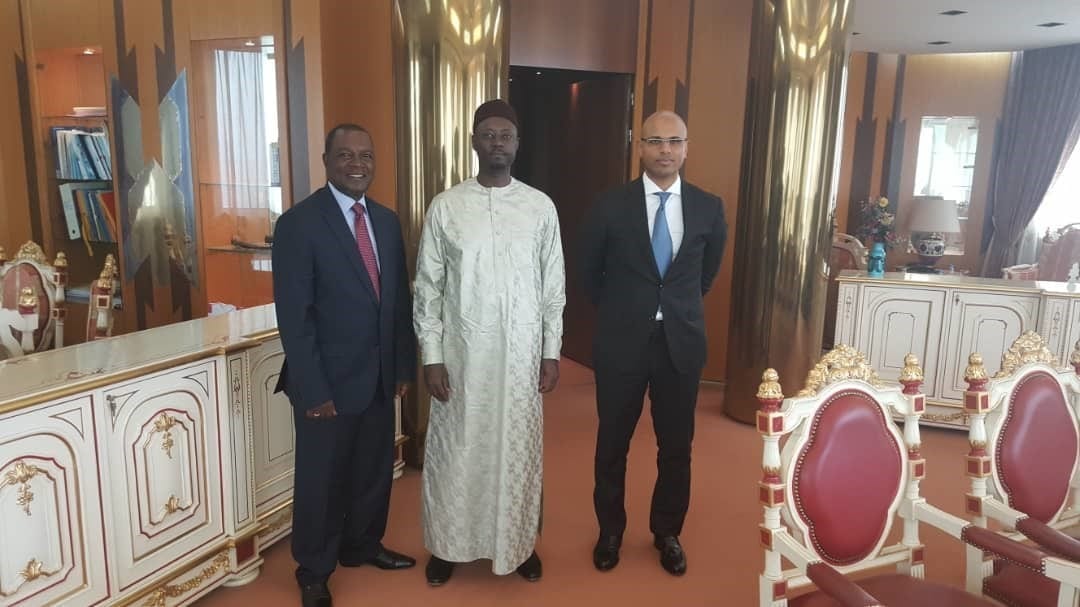
Professor Njuguna Ndung’u met with la Banque des tats de l’Afrique Centrale (BEAC) Governor Abbas Mahamat Tolli on February 13th in Yaoundé, Cameroon to discuss the integration of BEAC into AERC’s Governors Forum. Also present was the Director General of Research, Ivan Bacall Ebe Molina.

Created in 1972, the Bank of Central African States (BEAC) is the central bank common to the six states that make up the Economic and Monetary Community of Central Africa (CEMAC). They are respectively Cameroon, Central African Republic, Congo, Gabon, Equatorial Guinea and Chad.

BEAC’s mission is to:

  • promote financial stability
  • promote the smooth functioning of payment and settlement systems
  • hold and manage the official foreign exchange reserves of the Member States
  • lead the CEMAC exchange rate policy
  • issue fiduciary money (banknotes and coins that are legal tender and discharging power in the CEMAC)
  • define and conduct the monetary policy of CEMAC.

AERC seeks to increase engagement with Francophone Africa to ensure that we effectively serve all stakeholders in the region.

African Economic Research Consortium
Get in touch

3rd Floor, Middle East Bank Towers Building, Jakaya Kikwete Road, Nairobi, Kenya
Phone: +254 722 205272
+254 20 2734150
Fax: +254 20 2734170

Go Social
Subscribe to our Newsletter